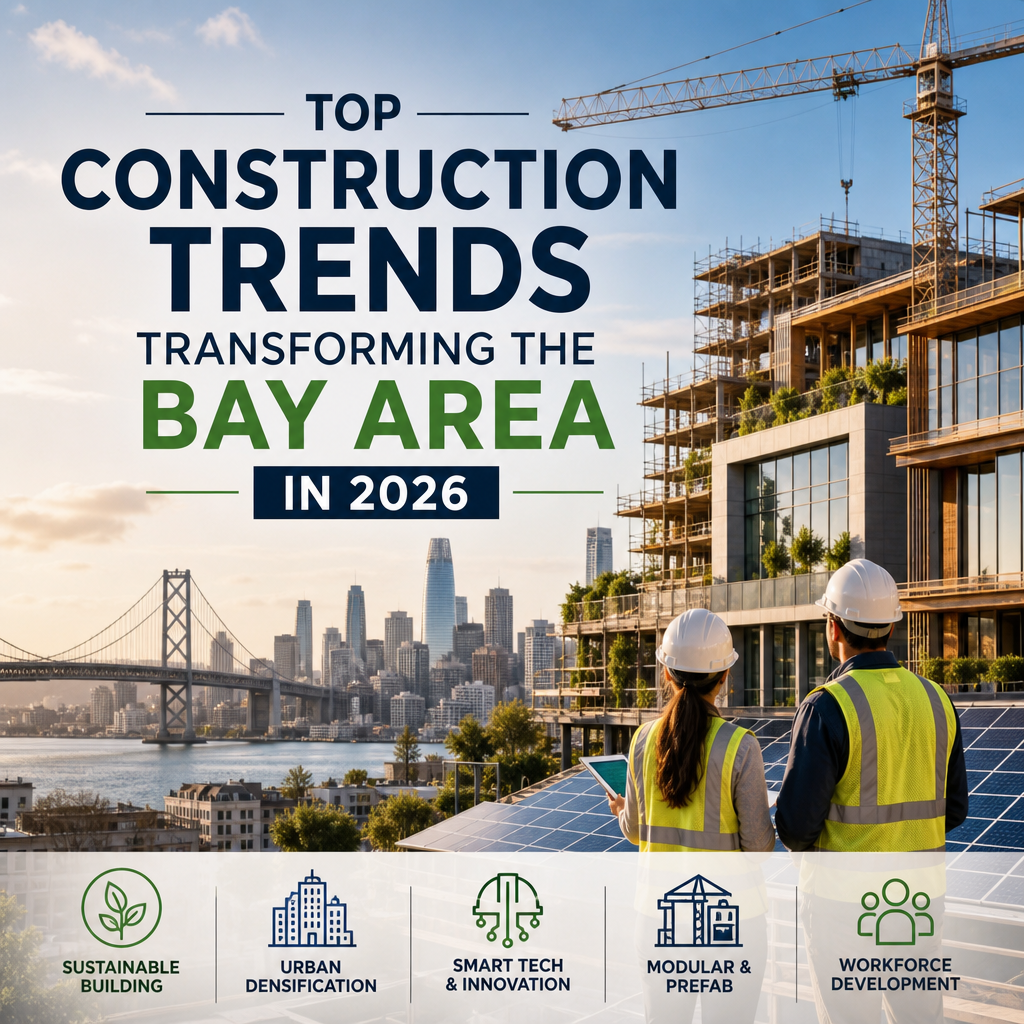
Top Construction Trends Transforming the Bay Area in 2026
Top Construction Trends Transforming the Bay Area in 2026
The Bay Area construction trends 2026 are being shaped by a mix of technology, sustainability, labor shifts, and changing community needs. From San Francisco to San Jose and across the East Bay, builders are adapting to new regulations, tighter timelines, and rising demand for smarter, greener spaces. The result is a construction landscape that looks very different from just a few years ago.
As the region continues to grow and modernize, developers and contractors are focusing on projects that are efficient, resilient, and built for the future. Here are the top trends transforming construction across the Bay Area in 2026.
1. Sustainable Building Is Now the Standard
Green construction is no longer a niche market in the Bay Area. It is becoming the baseline expectation for both commercial and residential projects.
Builders are using more:
- Low-carbon concrete
- Recycled steel and wood
- Energy-efficient insulation
- Solar-ready roofing systems
- Water-saving fixtures and landscaping
California’s climate goals, combined with local energy codes, are pushing developers to reduce emissions at every stage of construction. Many projects now aim for certifications like LEED, WELL, or Passive House. In 2026, sustainability is not just about marketing. It is about compliance, long-term value, and lower operating costs.
2. Modular and Prefabricated Construction Is Expanding
One of the biggest Bay Area construction trends 2026 is the rise of modular and prefabricated building methods. With labor shortages and high costs still affecting the region, faster construction methods are gaining popularity.
Prefabrication allows many building components to be made off-site and assembled quickly on location. This approach helps reduce:
- Construction delays
- Material waste
- Weather-related disruptions
- On-site labor demands
Modular construction is especially useful for multifamily housing, schools, offices, and healthcare facilities. In a region where speed and space are both limited, this trend is becoming a practical solution.
3. Smart Technology Is Being Built Into Projects
Technology is playing a larger role than ever in Bay Area construction. Contractors are using digital tools to improve accuracy, communication, and project management.
Common technologies include:
Building Information Modeling
BIM helps teams create detailed 3D models before construction begins, making it easier to detect conflicts and reduce costly errors.
Drones and Site Monitoring
Drones are being used to track progress, inspect hard-to-reach areas, and improve jobsite safety.
AI-Powered Scheduling
Artificial intelligence is helping project managers predict delays, manage resources, and optimize workflows.
Smart Building Systems
New buildings are being equipped with sensors for lighting, HVAC, security, and energy management. These systems improve efficiency and support ongoing maintenance.
In a competitive market like the Bay Area, digital tools are helping firms deliver faster and with greater precision.
4. Adaptive Reuse Is Gaining Momentum
Vacant or underused buildings are being transformed into new spaces instead of being torn down. Adaptive reuse is a smart response to limited land availability, high demolition costs, and growing interest in preserving local character.
Older offices, warehouses, and industrial spaces are being converted into:
- Apartments
- Creative workspaces
- Retail hubs
- Mixed-use developments
- Community facilities
This trend supports urban density while reducing waste. It also helps developers navigate zoning challenges by making better use of existing structures. In 2026, adaptive reuse is one of the most efficient ways to breathe new life into aging Bay Area properties.
5. Resilience and Seismic Safety Are Top Priorities
Because the Bay Area sits in an active seismic zone, structural resilience remains a major focus. New construction is being designed with stronger foundations, improved materials, and better emergency readiness.
Builders are paying closer attention to:
- Earthquake-resistant framing
- Fire-resistant materials
- Flood management systems
- Backup power solutions
- Emergency water storage
Climate-related risks are also influencing design choices. With wildfire threats, heat waves, and coastal flooding becoming more common, resilience is now part of the planning process from day one.
6. Housing Innovation Is Driving Development
Housing remains one of the region’s most pressing challenges, and construction is responding with new approaches. Cities across the Bay Area are encouraging denser, more flexible housing options to address affordability and supply shortages.
Popular housing strategies include:
- Accessory dwelling units
- Transit-oriented development
- Micro-units and compact apartments
- Mixed-income communities
- Higher-density infill projects
These developments aim to make better use of existing infrastructure while supporting walkable neighborhoods and public transit. In 2026, housing innovation is a major driver of construction activity across the region.
7. Workforce Efficiency Is More Important Than Ever
Labor remains one of the biggest challenges in construction, so firms are focusing on training, safety, and productivity. Automation is helping, but skilled workers are still essential.
Companies are investing in:
- Apprentice programs
- Safety technology
- Remote collaboration tools
- Better jobsite planning
- Equipment that reduces physical strain
At the same time, many contractors are working to attract younger workers by emphasizing career growth, technology, and sustainability. Workforce development is becoming just as important as project delivery.
The Future of Bay Area Construction
The Bay Area construction trends 2026 reflect a region that is adapting quickly to economic pressure, environmental demands, and new design expectations. Sustainability, modular methods, smart technology, and resilient building practices are reshaping how projects are planned and built.
For property owners, developers, and contractors, the message is clear: success in 2026 depends on building smarter, faster, and with long-term impact in mind. The Bay Area is not just keeping up with change. It is helping define what modern construction looks like.