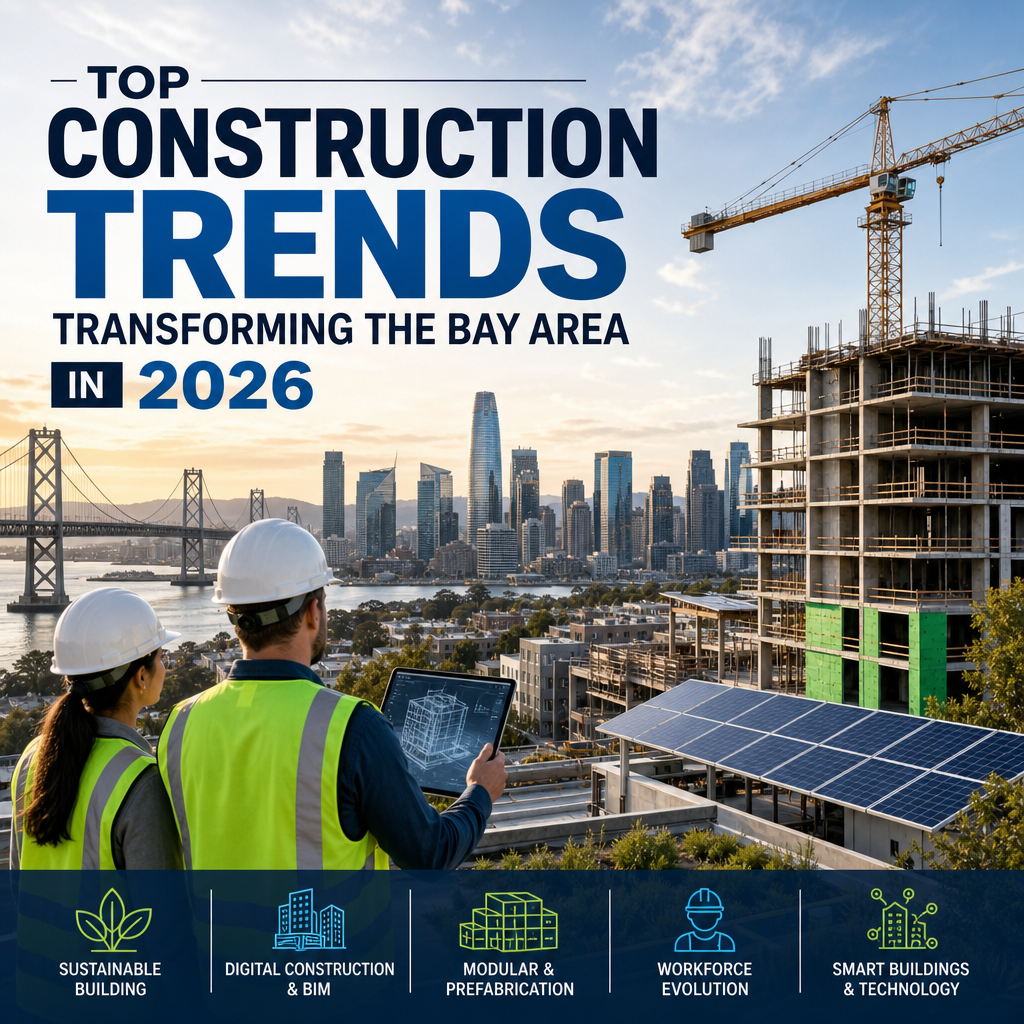
Top Construction Trends Transforming the Bay Area in 2026
Top Construction Trends Transforming the Bay Area in 2026
The Bay Area construction market is entering 2026 with a clear shift in priorities. Developers, builders, and property owners are responding to rising labor costs, stricter sustainability goals, and the region’s ongoing need for smarter housing and infrastructure. As a result, the top construction trends transforming the Bay Area in 2026 are not just about building more—they are about building better, faster, and with more resilience.
From modular methods to advanced green building practices, the region is continuing to serve as a proving ground for innovation. Here are the biggest trends shaping construction across the Bay Area this year.
1. Modular and Prefabricated Construction Is Going Mainstream
Modular and prefabricated building methods have gained momentum for years, but in 2026 they are becoming a serious solution rather than a niche strategy. In a market where speed and labor efficiency matter, off-site fabrication offers major advantages.
Why it matters
- Reduces project timelines
- Helps manage labor shortages
- Improves quality control
- Minimizes waste on job sites
In the Bay Area, where housing demand remains intense, developers are increasingly turning to modular construction for multifamily housing, accessory dwelling units, and commercial expansions. Faster delivery means projects can move from planning to occupancy more efficiently, which is especially valuable in high-cost urban zones.
2. Sustainable Building Is Now Standard
Sustainability is no longer a bonus feature. In 2026, it is one of the defining expectations for new construction in the Bay Area. Local regulations, environmental awareness, and long-term cost savings are all pushing the industry toward greener practices.
Builders are prioritizing:
- Low-carbon concrete and alternative materials
- Energy-efficient HVAC systems
- High-performance insulation and glazing
- Solar-ready roofs and battery storage
- Water-saving fixtures and landscaping
Many projects are also aiming for higher green certification standards. Whether the goal is LEED, Net Zero, or a local sustainability benchmark, owners are now viewing environmentally responsible design as a core investment rather than an added expense.
3. Adaptive Reuse Is Reshaping Urban Space
With land at a premium, the Bay Area is seeing more projects that repurpose existing buildings instead of starting from scratch. Adaptive reuse has become one of the most practical and creative construction strategies in 2026.
Older office buildings, warehouses, and retail spaces are being converted into:
- Residential units
- Mixed-use developments
- Creative office spaces
- Community and cultural centers
This trend is especially relevant in urban cores where vacancy rates have made reuse more appealing than new ground-up construction. It also helps preserve neighborhood character while meeting modern needs. For developers, adaptive reuse can shorten approval timelines and offer a more cost-effective path to delivering value.
4. Smart Building Technology Is Built In From Day One
Technology is now embedded into the construction process itself, not just the final product. Smart building systems are becoming standard in both residential and commercial projects across the Bay Area.
In 2026, new developments are more likely to include:
- Automated lighting and climate controls
- Occupancy sensors
- Remote energy monitoring
- Integrated security systems
- Predictive maintenance tools
These systems support lower operating costs and better tenant experiences. For property owners, they also provide real-time data that can improve asset management and energy performance over time. In a region known for innovation, smart buildings are quickly becoming expected rather than exceptional.
5. Resilience and Climate Readiness Are a Priority
The Bay Area’s geography makes resilience a major construction concern. Earthquake preparedness, wildfire risk, flooding, and extreme heat are all influencing how projects are designed and built in 2026.
Builders are focusing on:
- Seismic reinforcement
- Fire-resistant materials
- Improved drainage and stormwater systems
- Cool roofing and passive ventilation
- Backup power and microgrid integration
Climate readiness is especially important for public infrastructure, multifamily housing, and commercial campuses. Owners and municipalities are increasingly aware that resilience is not only about safety—it is also about protecting long-term investment and reducing future repair costs.
6. Workforce Efficiency and Digital Tools Are Driving Productivity
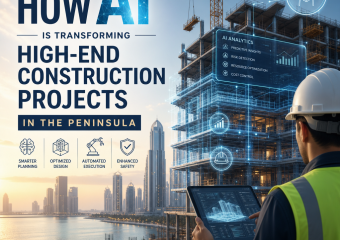
Labor remains one of the biggest challenges in construction, and Bay Area firms are responding with digital tools that help teams work more efficiently. In 2026, technology is playing a larger role in planning, coordination, and field execution.
Common tools include:
- Building information modeling (BIM)
- AI-assisted scheduling
- Drone site surveys
- Cloud-based project management platforms
- Mobile field reporting apps
These tools reduce delays, improve communication, and help teams catch problems earlier. As projects grow more complex, digital coordination is becoming essential for staying on budget and on schedule.
7. Mixed-Use and Community-Focused Development Continues to Grow
The Bay Area continues to embrace development that blends housing, retail, office, and public space. Mixed-use projects align with changing work patterns and support more walkable, connected neighborhoods.
What’s driving the trend
- Demand for live-work-play environments
- Interest in reducing car dependence
- Need for community amenities
- Greater flexibility in urban planning
In 2026, construction is increasingly centered on creating spaces that serve multiple functions and strengthen local identity. This approach helps developers make better use of limited land while meeting a wider range of community needs.
The Future of Bay Area Construction
The top construction trends transforming the Bay Area in 2026 reflect a broader shift toward smarter, more sustainable, and more resilient development. Builders are using technology to improve efficiency, choosing materials that reduce environmental impact, and designing spaces that can adapt to changing economic and climate conditions.
For anyone involved in Bay Area development, staying ahead of these trends is essential. The region’s construction landscape is moving quickly, and the projects that succeed will be the ones that balance innovation with practicality.