How Bay Area Contractors Use AI to Improve Project Efficiency
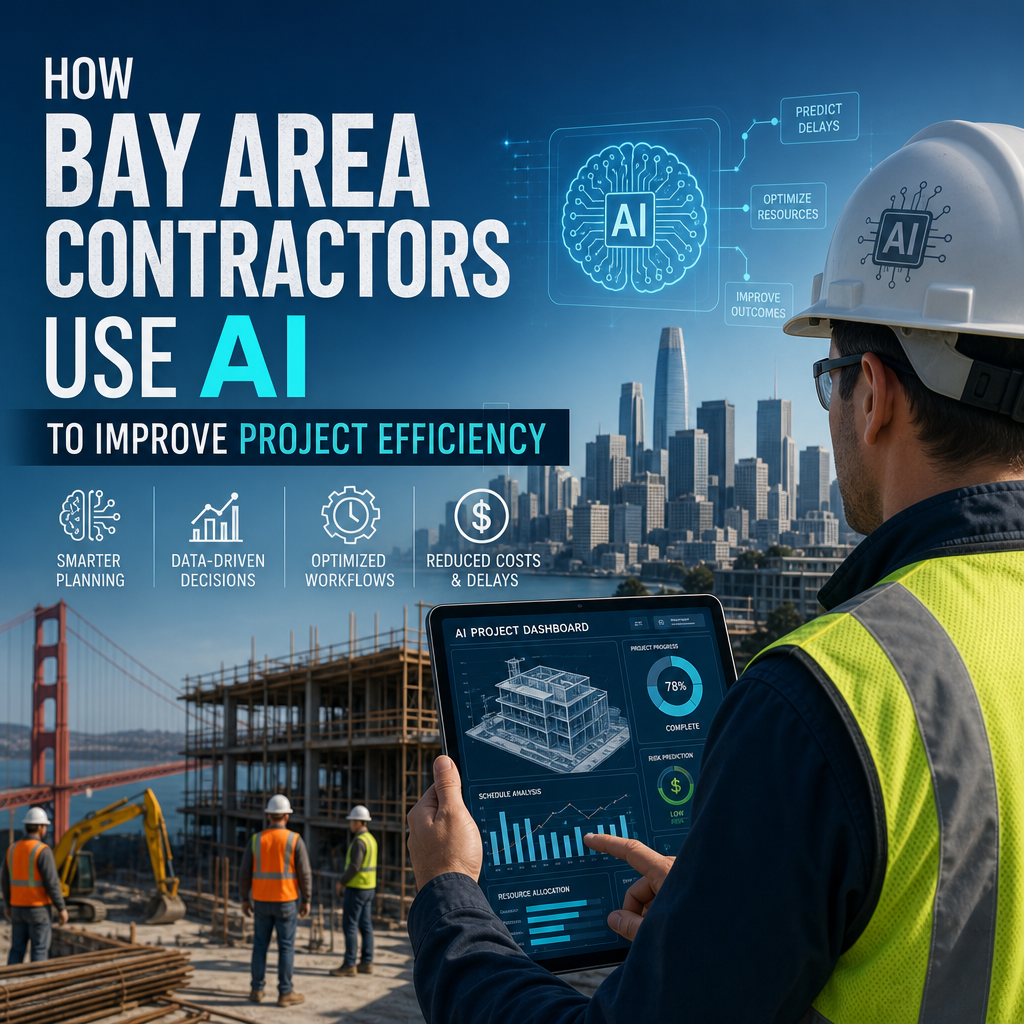
How Bay Area Contractors Are Using AI to Improve Project Efficiency
The construction industry in the Bay Area has always moved fast, but recent pressures have made speed and precision more important than ever. Rising labor costs, tight permitting timelines, supply chain delays, and demanding clients leave little room for error. To stay competitive, many firms are turning to artificial intelligence. Bay Area contractors are using AI to improve project efficiency in ways that would have seemed futuristic just a few years ago.
From smarter scheduling to better risk management, AI is helping contractors reduce waste, save time, and make more informed decisions on the jobsite.
Why AI Matters in Construction
Construction projects are full of moving parts. Crews, materials, subcontractors, inspections, weather, and budgets all need to line up at the right time. A single delay can ripple through an entire project.
AI helps contractors handle this complexity by analyzing large amounts of data quickly. Instead of relying only on manual planning or gut instinct, teams can use AI-powered tools to identify patterns, predict problems, and adjust plans before issues grow expensive.
In a region like the Bay Area, where project timelines are often compressed and expectations are high, those advantages matter.
Smarter Scheduling and Planning
One of the biggest ways AI improves efficiency is through scheduling. Traditional construction schedules can be difficult to manage, especially when subcontractors and material deliveries are constantly shifting. AI tools can review past project data and current conditions to recommend more realistic timelines.
Benefits of AI scheduling tools include:
- Predicting delays before they happen
- Adjusting schedules based on weather or supply changes
- Coordinating subcontractor availability
- Flagging conflicts in labor or equipment use
For Bay Area contractors, this means fewer surprises and less downtime. A project manager can see where bottlenecks are likely to occur and make adjustments early instead of reacting after work has already slowed.
Better Jobsite Monitoring
AI is also changing how contractors monitor active jobsites. Cameras, drones, and sensors can feed data into AI systems that track progress and compare it against plans. These tools can help identify whether work is on schedule, whether materials are being used efficiently, and whether safety rules are being followed.
For example, a contractor may use AI-enabled drone footage to measure site progress or detect areas where work has stalled. This gives teams a clearer picture of what is happening in real time.
Common monitoring uses include:
- Progress tracking against milestones
- Detecting safety hazards
- Monitoring equipment usage
- Identifying material waste
This level of visibility helps contractors make faster decisions and avoid costly mistakes. It also supports more accurate reporting to clients and stakeholders.
Improving Cost Control
Construction budgets can be fragile. Small overruns on labor or materials can quickly add up, especially in high-cost markets like the Bay Area. AI tools help contractors control spending by analyzing expenses and predicting where costs may rise.
These systems can compare current project spending to historical data and alert teams when a budget is at risk. They can also help with procurement by forecasting material needs more accurately, reducing overordering and unnecessary storage costs.
When contractors have a better sense of what a project will actually require, they can protect margins while still delivering quality work.
Reducing Rework and Errors
Rework is one of the biggest drains on construction efficiency. A design mismatch, measurement error, or missed detail can cause delays and extra labor. AI can help catch issues earlier in the process.
Some firms use AI-driven design review tools to scan blueprints for conflicts before construction begins. Others use computer vision on-site to compare finished work with digital plans. These systems can spot potential errors before they become expensive fixes.
By catching problems early, contractors save time, reduce material waste, and improve overall quality.
Strengthening Safety on the Jobsite
Safety is a top priority for every contractor, and AI is becoming a valuable tool in this area as well. AI-powered systems can analyze site conditions and worker behavior to identify risky situations.
For example, visual recognition software can alert supervisors if workers enter restricted areas without proper gear. Predictive analytics can also help identify patterns that may lead to incidents, such as repeated equipment issues or unsafe site layouts.
A safer site is usually a more efficient one. Fewer incidents mean fewer interruptions, less liability, and better morale among crews.
Helping with Labor Shortages
Like many parts of the country, the Bay Area has faced labor challenges in construction. Skilled workers are in demand, and crews are often stretched thin. AI cannot replace experienced tradespeople, but it can help them work more effectively.
By automating time-consuming administrative tasks, AI frees up teams to focus on higher-value work. Examples include:
- Generating reports
- Organizing project documents
- Drafting estimates
- Managing communications
- Tracking daily logs
This kind of support reduces administrative burden and helps project managers stay focused on field operations.
The Future of AI in Bay Area Construction
AI adoption in construction is still growing, but the trend is clear. Bay Area contractors are using AI to improve project efficiency because it offers practical solutions to real-world challenges. As tools become easier to use and more affordable, more firms will likely integrate them into everyday operations.
The contractors who benefit most will be the ones who treat AI as a support system, not a replacement for expertise. Construction still depends on skilled people, experience, and good judgment. AI simply gives teams better data, faster insights, and more control over complex projects.
Conclusion
The construction industry is changing, and technology is playing a bigger role in how projects are planned and delivered. Bay Area contractors are using AI to improve project efficiency by streamlining schedules, monitoring jobsites, reducing errors, managing costs, and supporting safety.
For firms working in a demanding market, AI is becoming more than a trend. It is a practical way to build smarter, save time, and stay ahead in a competitive region.