
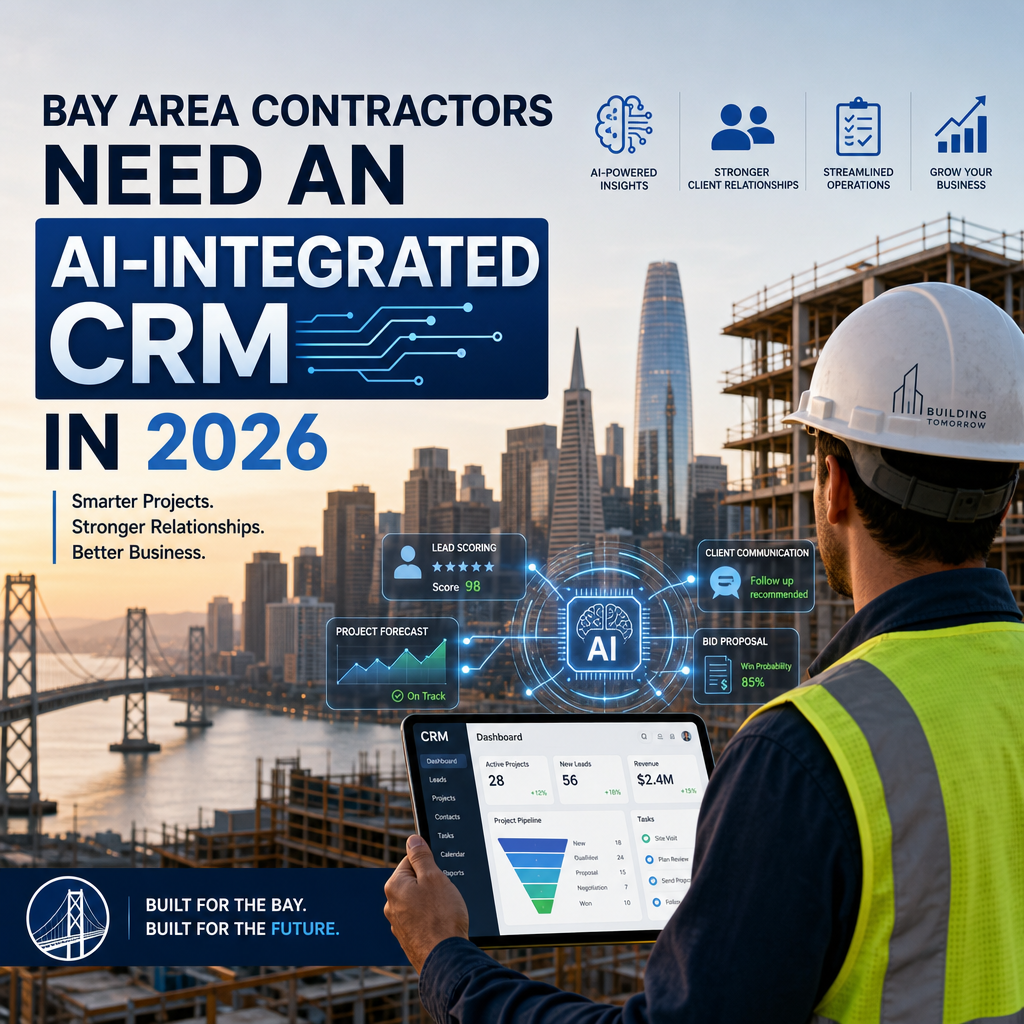
Bay Area Contractors Need an AI-Integrated CRM in 2026
Why Every Bay Area Contractor Needs an AI-Integrated CRM in 2026
The Bay Area construction market is changing fast. Between rising labor costs, tight project timelines, demanding clients, and fierce competition, contractors need every possible advantage to stay organized and profitable. In 2026, that advantage is no longer just a standard customer database or spreadsheet. It’s an AI-integrated CRM.
For contractors working across San Francisco, Oakland, San Jose, and the surrounding region, the pressure to respond quickly, manage leads efficiently, and keep projects moving has never been higher. An AI-powered CRM helps contractors do all of that with less manual work and fewer missed opportunities.
What Is an AI-Integrated CRM?
A CRM, or customer relationship management system, helps businesses track leads, manage client communication, and organize sales pipelines. An AI-integrated CRM takes that a step further by using artificial intelligence to automate tasks, predict outcomes, and improve decision-making.
For contractors, that can mean:
- Automatically scoring leads based on likelihood to convert
- Suggesting the best time to follow up with prospects
- Drafting email responses and appointment reminders
- Forecasting project demand and revenue
- Organizing client data without constant manual entry
Instead of acting like a digital filing cabinet, the CRM becomes an active assistant.
Why Bay Area Contractors Can’t Afford to Rely on Old Systems
Many contractors still depend on a mix of spreadsheets, sticky notes, phone calls, and inbox searches to keep business moving. That may have worked when the pace was slower, but it creates problems in a competitive market like the Bay Area.
Leads can slip through the cracks. Follow-ups get delayed. Estimates are forgotten. Clients expect faster responses than ever, and a slow reply often means lost business.
An AI-integrated CRM helps solve these issues by keeping every interaction in one place and flagging what needs attention next. That matters in a region where homeowners and commercial clients often compare multiple contractors before making a decision.
Faster Lead Response Means More Closed Jobs
Speed is critical in construction sales. When a potential client fills out a contact form or calls for an estimate, the first contractor to respond often has the best chance of winning the job.
An AI-integrated CRM can:
- Capture new leads instantly from your website or ads
- Assign follow-ups automatically to the right team member
- Send immediate acknowledgment emails or texts
- Prioritize high-value opportunities based on past behavior
This kind of automation reduces response times and helps contractors stay ahead of competitors. In the Bay Area, where homeowners and developers often move quickly, that can make a major difference.
Better Forecasting for Busy and Slow Seasons
Construction businesses rarely have perfectly steady demand. One month may be packed with bids and project starts, while the next may feel quiet. That unpredictability makes planning difficult.
AI can analyze your historical sales data, lead sources, seasonality, and close rates to identify patterns. A smart CRM can then help you forecast when work is likely to increase or slow down.
That gives contractors a better way to:
- Plan staffing needs
- Schedule marketing campaigns
- Estimate future revenue
- Balance residential and commercial work
Instead of guessing, you can make decisions based on actual data.
Stronger Client Communication Without Extra Admin Work
One of the biggest challenges for contractors is staying in touch with clients throughout the entire process. There are estimates to send, change orders to approve, timelines to update, and follow-ups after the job is complete.
An AI-integrated CRM can automate much of this communication while still keeping it personal. It can remind clients about appointments, send project updates, and even suggest next steps based on where each customer is in the pipeline.
This creates a better experience for clients and saves hours of administrative work each week. For small and mid-sized Bay Area contractors, that time savings is huge.
Less Busywork for Office and Field Teams
Contractors don’t just need more leads. They need better systems. The office team is often buried in admin tasks, while field teams are focused on getting the work done. If communication between the two is messy, mistakes happen.
An AI-integrated CRM helps centralize information so everyone sees the same updates. Estimates, notes, customer preferences, and job status can all live in one platform.
That means:
- Fewer duplicate entries
- Fewer missed messages
- Better handoffs between sales and operations
- Cleaner project records
When teams spend less time chasing information, they can spend more time serving clients.
Why 2026 Is the Turning Point
By 2026, AI tools are no longer experimental. They are becoming standard business infrastructure. Clients are also expecting faster replies, clearer communication, and a more polished experience from the contractors they hire.
Bay Area contractors who adopt an AI-integrated CRM now will be better positioned to compete in a market that rewards speed, organization, and professionalism. Those who wait may find themselves buried by manual processes while competitors move ahead.
Choosing the Right CRM
Not every CRM is built for contractors. The best system should support your real workflow, not force you into a generic sales process.
Look for features like:
- Lead capture from web forms and ads
- Automated follow-up sequences
- AI-driven lead scoring
- Mobile access for field teams
- Job tracking and pipeline visibility
- Integration with email, text, and scheduling tools
The goal is to find a system that fits the way your business actually operates.
The Bottom Line
In a fast-moving market like the Bay Area, contractors need more than hard work to grow. They need systems that help them respond faster, stay organized, and win more jobs.
An AI-integrated CRM gives contractors the power to manage leads, improve communication, and forecast business with far less effort. In 2026, that isn’t a luxury. It’s a competitive necessity.