
How Bay Area Contractors Handle Earthquake-Resistant Construction
How Bay Area Contractors Handle Earthquake-Resistant Construction
In the Bay Area, earthquake resilience is not an optional upgrade. It is a core part of responsible building. With active fault lines, dense neighborhoods, and a mix of older and newer structures, contractors in this region have to think differently about design, materials, and construction methods. Earthquake-resistant construction is about reducing the chance of severe damage and helping a building remain safe when the ground shakes.
Bay Area contractors approach this work with a combination of engineering knowledge, code compliance, and practical field experience. Their goal is not to make a building “earthquake-proof” — that is not realistic — but to make it perform better when seismic activity occurs.
Why Earthquake-Resistant Construction Matters
The Bay Area sits in one of the most seismically active regions in the country. That means contractors must account for:
- Ground shaking
- Soil movement
- Liquefaction in some areas
- Structural drift
- Damage to non-structural elements like walls, ceilings, and utilities
A building that looks strong on the outside may still fail if it is not properly reinforced. For that reason, earthquake-resistant construction focuses on how a structure behaves under stress, not just how it appears.
Planning Starts Before the First Foundation Pour
Good seismic design begins long before construction starts. Bay Area contractors often work closely with architects and structural engineers to review site conditions, building use, and local code requirements.
Site and Soil Evaluation
Soil type plays a major role in earthquake performance. Some areas in the Bay Area have soft ground or fill that can amplify shaking. In other locations, there may be a higher risk of liquefaction, where saturated soil temporarily behaves like a liquid during an earthquake.
Contractors use geotechnical reports to determine:
- Soil stability
- Foundation requirements
- Drainage concerns
- Whether special reinforcement is needed
This early analysis helps guide the rest of the project.
Code Compliance
California building codes are among the strictest in the nation, and Bay Area contractors must follow them carefully. These codes address structural framing, foundation anchoring, wall bracing, connections, and material performance.
Experienced contractors stay current with:
- California Building Code updates
- Local city and county amendments
- Seismic retrofit standards
- Special requirements for schools, commercial buildings, and multifamily housing
Code compliance is not just paperwork. It directly affects how well a building can withstand seismic forces.
Key Construction Methods Used by Bay Area Contractors
Contractors use several strategies to improve seismic performance. The exact approach depends on the building type, age, and location.
Stronger Foundations
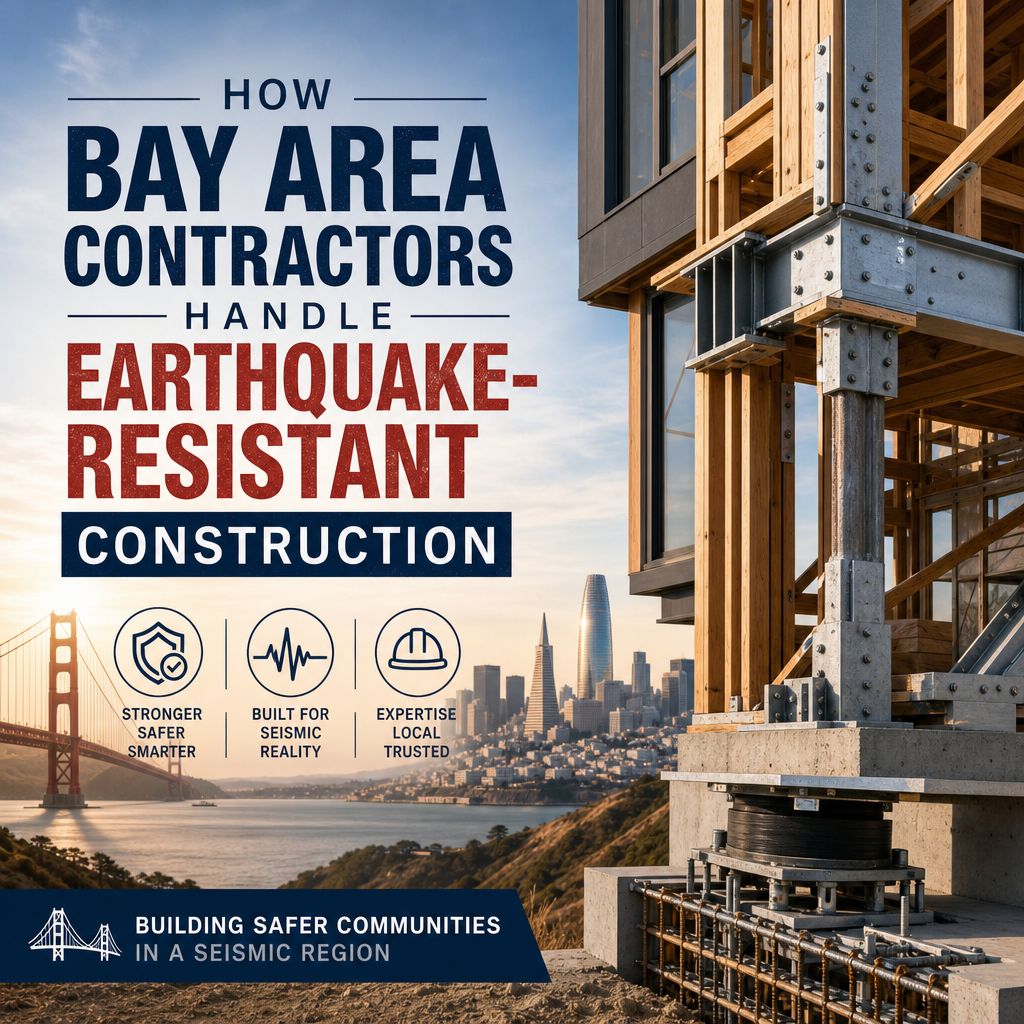
A stable foundation is essential. Bay Area contractors often reinforce foundations with:
- Deepened footings
- Anchor bolts
- Steel hold-downs
- Grade beams
- Reinforced concrete
These elements help keep the structure connected to the ground and reduce movement during shaking.
Shear Walls and Bracing
Shear walls are designed to resist sideways motion, which is one of the biggest threats during an earthquake. Contractors place them strategically to help transfer seismic forces safely through the structure.
Bracing is also common in framing systems, especially in wood construction. It helps prevent the frame from twisting or collapsing under lateral pressure.
Flexible Framing Connections
Buildings need some ability to move without breaking apart. That is why contractors pay close attention to how beams, columns, joists, and walls connect.
Common connection methods include:
- Metal connectors
- Structural screws and bolts
- Simpson-style hardware
- Reinforced joints
These connections allow the building to flex while maintaining overall stability.
Retrofitting Older Buildings
The Bay Area has many older homes and commercial properties that were built before modern seismic codes. Contractors often work on retrofit projects to bring these buildings closer to current safety standards.
Common Retrofit Upgrades
Typical earthquake retrofit work may include:
- Bolting the house to the foundation
- Adding cripple wall bracing
- Strengthening soft-story buildings
- Reinforcing masonry walls
- Securing water heaters and other heavy equipment
- Upgrading utility connections
Soft-story buildings, especially those with open parking on the ground level, are a major concern. Contractors reinforce these structures to reduce the risk of collapse during a major quake.
Balancing Safety and Preservation
In historic neighborhoods, contractors must often preserve the building’s character while improving its strength. That takes careful planning and specialized materials so the retrofit does not alter the appearance more than necessary.
Non-Structural Safety Is Part of the Job
Earthquake damage is not limited to the frame of a building. Cabinets, lighting, piping, sprinkler systems, and mechanical equipment can all fail if not secured properly. Bay Area contractors often include non-structural measures as part of the project.
These may involve:
- Strapping water heaters
- Bracing ductwork
- Securing ceiling systems
- Anchoring shelves and equipment
- Using flexible utility connections
These details may seem small, but they can prevent injuries and reduce repair costs after a quake.
Communication and Inspection Matter
Earthquake-resistant construction requires careful coordination. Contractors rely on inspections at key stages to verify that reinforcement has been installed correctly. If something is missed, even a strong design can underperform.
Good contractors also keep property owners informed about:
- What upgrades are necessary
- Which parts of the structure are most vulnerable
- How the project fits within budget
- What level of risk reduction the work provides
This transparency helps owners make informed decisions about safety and investment.
Building for the Bay Area Means Building for Risk
Bay Area contractors understand that seismic safety is part of everyday construction. Whether they are building a new home, upgrading a commercial property, or retrofitting an older structure, they use engineering, code knowledge, and proven building methods to reduce earthquake damage.
Earthquake-resistant construction is about preparation, not panic. By reinforcing foundations, improving connections, upgrading older buildings, and securing vulnerable systems, contractors help Bay Area properties stand a better chance when the next big quake arrives.