Future of Smart Homes in the Bay Area for Contractors
The Future of Smart Homes in the Bay Area: What Contractors Need to Know
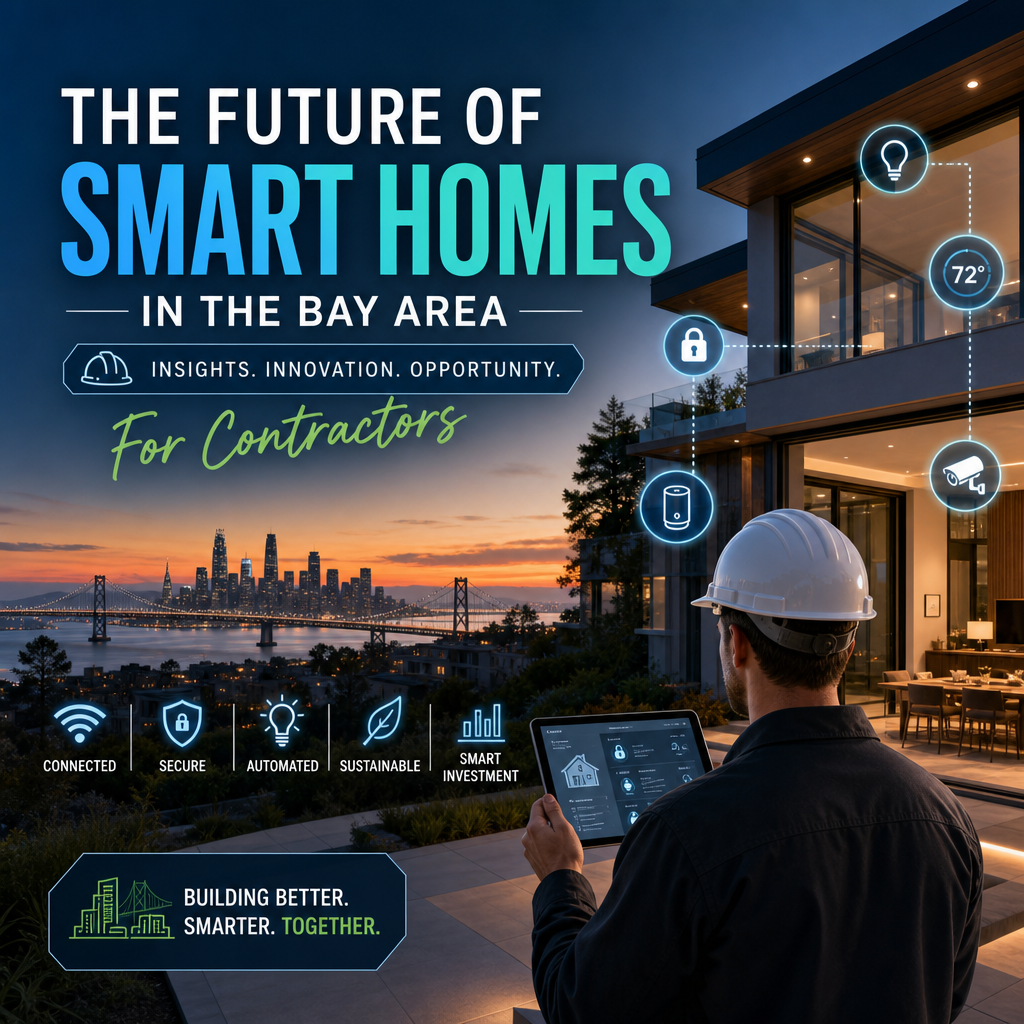
The future of smart homes in the Bay Area is moving fast, and contractors are at the center of that shift. From San Francisco condos to Silicon Valley remodels and Marin County new builds, homeowners increasingly expect homes that are connected, energy-efficient, secure, and easy to manage. For contractors, this is no longer a niche upgrade. It is becoming a standard part of residential planning and remodeling.
To stay competitive, contractors need to understand not just the devices people want, but also how smart home systems affect wiring, networking, design, and long-term maintenance. The Bay Area’s tech-savvy market creates both opportunities and higher expectations.
Why the Bay Area Is Driving Smart Home Demand
Few regions are better positioned for smart home growth than the Bay Area. Several factors are pushing demand:
- A strong tech culture and early adoption mindset
- High property values, which make premium upgrades more attractive
- Interest in energy efficiency and sustainability
- Growing concern over home security and remote monitoring
- Frequent remodels and custom home projects
Homeowners in this market often want more than a few connected devices. They are looking for integrated systems that control lighting, climate, security, audio, window treatments, and appliances from one interface.
For contractors, that means smart home readiness needs to be part of the conversation from the start.
What Smart Home Features Are Becoming Standard
As smart technology matures, certain features are shifting from luxury add-ons to expected options. Contractors should be familiar with the systems buyers most often request.
Common Smart Home Requests
- Smart lighting and dimming controls
- Wi-Fi-enabled thermostats and HVAC integration
- Video doorbells and security cameras
- Smart locks and access control
- Automated blinds and shades
- Whole-home audio and media systems
- Leak detection and water shutoff systems
- Energy monitoring and solar integration
These features are especially popular in Bay Area homes because they support convenience, energy savings, and property protection. In many cases, homeowners also want systems that can be controlled remotely through apps or voice assistants.
Why Contractors Need to Think Beyond Devices
A smart home is only as good as the infrastructure behind it. Many homeowners assume devices will work flawlessly once installed, but that is not always the case. Contractors need to pay attention to the foundation that supports these systems.
Key Infrastructure Considerations
- Strong Wi-Fi coverage throughout the home
- Ethernet runs for stable connections where needed
- Electrical planning for powered devices and charging stations
- Low-voltage wiring for security, audio, and automation
- Equipment closets or hubs for centralized control
- Future-proof conduit and access points
In older Bay Area homes, especially those built before modern networking needs, these upgrades may require careful planning. Contractors who can anticipate these issues will provide more value and reduce costly change orders later.
Energy Efficiency Is Part of the Appeal
Smart homes are not just about convenience. In the Bay Area, sustainability plays a major role in purchasing decisions. Many homeowners want technology that helps reduce utility costs and environmental impact.
Smart thermostats, occupancy sensors, automated shades, and energy usage dashboards are popular because they help manage power more efficiently. Solar-ready systems and battery storage integration are also increasingly relevant.
Contractors should understand how smart home systems can support green building goals. The ability to tie automation into energy management can be a strong selling point for clients focused on long-term savings.
Collaboration Matters More Than Ever
Today’s smart home projects often involve more than one trade. Contractors may need to coordinate with electricians, low-voltage specialists, IT professionals, designers, and smart home integrators. The earlier that coordination starts, the smoother the project will run.
Best Practices for Contractors
- Ask about smart home goals during initial planning
- Identify network and wiring needs before walls are closed
- Build in flexibility for future upgrades
- Document equipment locations and system dependencies
- Coordinate with tech vendors and integrators early
This kind of planning helps avoid delays and ensures the final system matches the homeowner’s expectations.
Challenges Contractors Should Expect
The demand is growing, but smart home projects also come with complications. Contractors in the Bay Area should be ready for:
- Client expectations that change as they learn about new technology
- Compatibility issues between brands and platforms
- Network performance problems in large or older homes
- Budget pressure after homeowners add automation features
- Ongoing service needs after installation
Managing expectations is just as important as technical execution. Clear communication about scope, compatibility, and maintenance can prevent frustration on both sides.
The Opportunity for Contractors
The future of smart homes in the Bay Area presents a major opportunity for contractors who are willing to adapt. Clients want professionals who understand both construction and connected technology. They want homes that are beautiful, efficient, secure, and ready for the next wave of innovation.
Contractors who invest in smart home knowledge can stand out in a crowded market. By planning for infrastructure, working with the right specialists, and staying current on emerging trends, they can position themselves as trusted partners in modern home building and remodeling.
In a region that values innovation, smart home expertise is quickly becoming a core business advantage.