Palo Alto & Mountain View Construction Trends Driving Demand
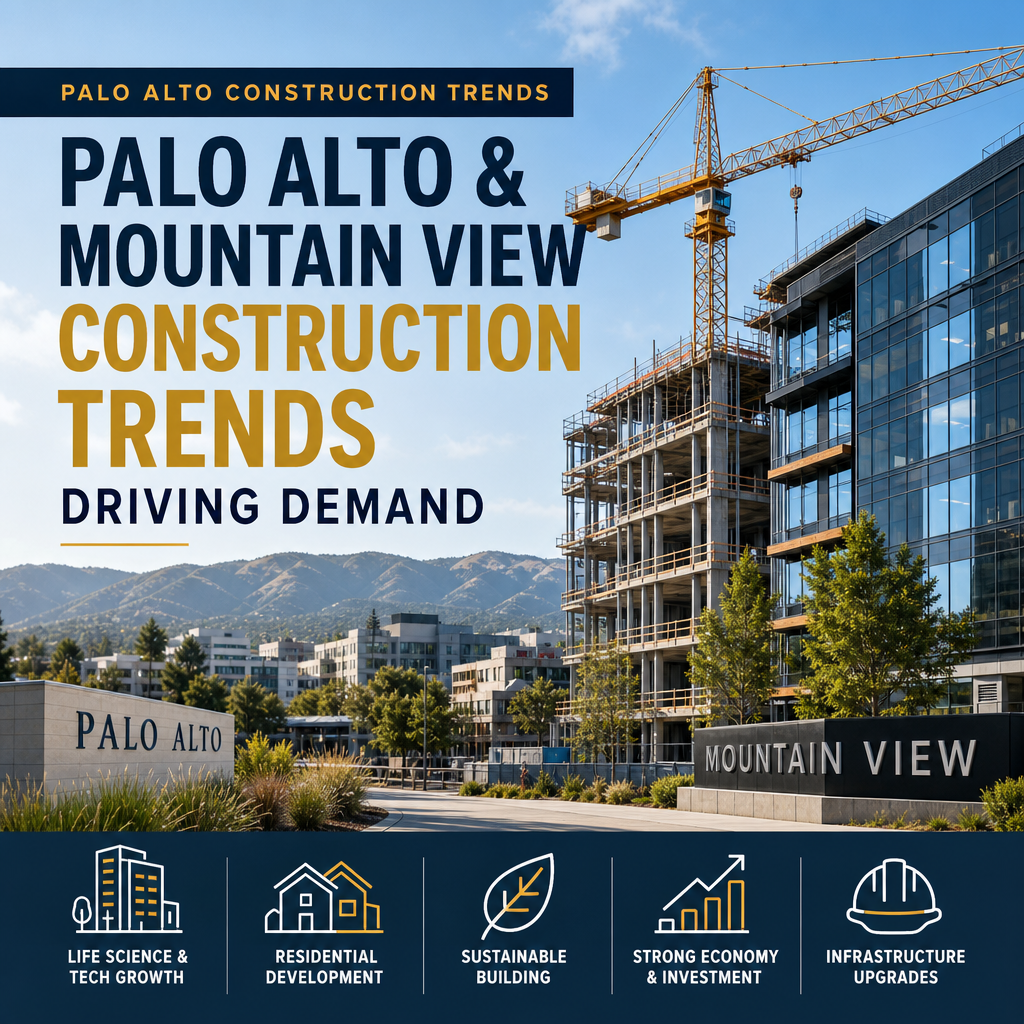
Palo Alto & Mountain View Construction Trends: What’s Driving Demand
Construction activity in Palo Alto and Mountain View continues to reflect the unique character of Silicon Valley. These cities are not only home to some of the world’s most influential tech companies, but also to highly desirable residential neighborhoods, transit-rich corridors, and limited land for expansion. As a result, Palo Alto & Mountain View construction trends are shaped by a mix of housing pressure, commercial reinvestment, sustainability goals, and long-term economic growth.
While the pace of development can feel measured compared with other parts of the Bay Area, demand remains strong. Builders, developers, and property owners are responding to a market where space is scarce, regulations are detailed, and expectations for quality are high.
A Persistent Need for More Housing
One of the biggest factors driving construction demand in both cities is the ongoing shortage of housing. Palo Alto and Mountain View attract highly educated professionals, families, and retirees who want access to top schools, job centers, and walkable amenities. That demand keeps pressure on the housing market and supports a steady stream of residential construction.
Key residential trends include:
-
Accessory dwelling units (ADUs)
Homeowners are adding backyard cottages, garage conversions, and attached units to create extra living space or rental income. -
Townhomes and multifamily infill projects
Small and mid-sized housing projects are becoming more common as cities look to increase density without major sprawl. -
Luxury renovations and rebuilds
Older homes are often remodeled or replaced with larger, energy-efficient residences tailored to modern lifestyles.
Because land is limited, much of the new residential work focuses on infill development, teardown-rebuild projects, and upgrades to existing homes rather than large suburban-style subdivisions.
Commercial Construction Is Evolving
The commercial landscape in these cities is also changing. With major employers continuing to operate nearby and innovation still centered in Silicon Valley, office and mixed-use projects remain important. However, the type of commercial construction being pursued has shifted.
Traditional office development has slowed in some areas, but that does not mean construction demand has disappeared. Instead, property owners are investing in spaces that better align with current needs.
Common commercial construction priorities:
- Office renovations and tenant improvements
- Mixed-use developments with retail and residential components
- Adaptive reuse of older buildings
- Lab and flex-space upgrades
- Hospitality and amenity-focused improvements
Companies now want workplaces that support collaboration, wellness, and flexibility. That has led to more remodels, reconfigurations, and modernization projects than brand-new office towers.
Sustainability and Energy Efficiency Matter More Than Ever
Environmental performance is a major driver of construction decisions in both Palo Alto and Mountain View. Local residents and city planners place a strong emphasis on reducing energy use, improving building performance, and supporting long-term resilience.
That means many new projects are being designed with sustainability in mind from the start.
Popular green building features include:
- Solar panels and battery storage
- High-performance windows and insulation
- Heat pump HVAC systems
- Water-efficient landscaping
- EV charging infrastructure
- Low-VOC materials and healthier indoor finishes
In addition to meeting local expectations, these upgrades can help reduce operating costs and improve property values. For many owners, energy-efficient construction is no longer optional; it is part of staying competitive.
Zoning and Permitting Shape Project Demand
Construction demand in Palo Alto and Mountain View is also influenced by how the cities regulate development. Both communities are known for careful planning, strong neighborhood involvement, and detailed permitting requirements. While that can slow some projects, it also creates a market where well-planned construction is essential.
Builders and owners must consider:
- Setback and height restrictions
- Parking requirements
- Design review standards
- Historic preservation rules
- California building and energy codes
- Local housing goals and density limits
These rules often make projects more complex, but they also encourage thoughtful design. As a result, construction in these cities tends to prioritize quality, compliance, and long-term livability.
Remote Work Has Changed Space Needs
Remote and hybrid work have had a noticeable impact on construction trends. Many homeowners now need more functional home offices, while businesses are rethinking the size and layout of their spaces. This shift has created new demand for remodeling and adaptive construction.
In residential projects, this often means:
- Converting bedrooms into offices
- Adding detached studio spaces
- Expanding square footage for multi-use rooms
- Improving soundproofing and lighting
In commercial projects, companies are often seeking:
- Smaller but better-designed office footprints
- Collaboration zones instead of rows of desks
- Wellness rooms and flexible meeting areas
- Technology-ready interiors
This change has not reduced construction demand; it has redirected it. The emphasis is now on efficiency, comfort, and versatility.
Infrastructure and Transit Access Add Value
Both Palo Alto and Mountain View benefit from strong transit connections, bike access, and proximity to major employment hubs. Areas near Caltrain stations, downtown corridors, and commercial centers remain especially attractive for development.
Projects close to transit often draw interest because they support walkability, reduce commuting stress, and align with city planning goals. This has encouraged more mixed-use and higher-density construction near key transportation nodes.
Infrastructure improvements also contribute to demand. Better streets, utilities, broadband access, and public amenities make it easier for developers to justify new projects and for property owners to invest in upgrades.
What This Means for the Local Market
The overall picture is clear: construction in Palo Alto and Mountain View is being driven by a combination of limited land, strong economic fundamentals, and changing space needs. Residential demand remains high, commercial properties are being modernized, and sustainability continues to shape nearly every project.
For homeowners, that means opportunities to expand, update, and improve existing properties. For developers and business owners, it means carefully planned projects that respond to local rules and market expectations. And for the region as a whole, it means construction will remain an important part of how these cities grow and adapt.
Final Thoughts
Palo Alto & Mountain View construction trends show a market that values innovation, efficiency, and long-term quality. Demand is being fueled by housing needs, commercial reinvestment, green building priorities, and the ongoing evolution of how people live and work.
As these cities continue to balance growth with livability, construction will remain focused on smart solutions rather than rapid expansion. That makes every project an opportunity to add value, improve functionality, and help shape the future of Silicon Valley.