

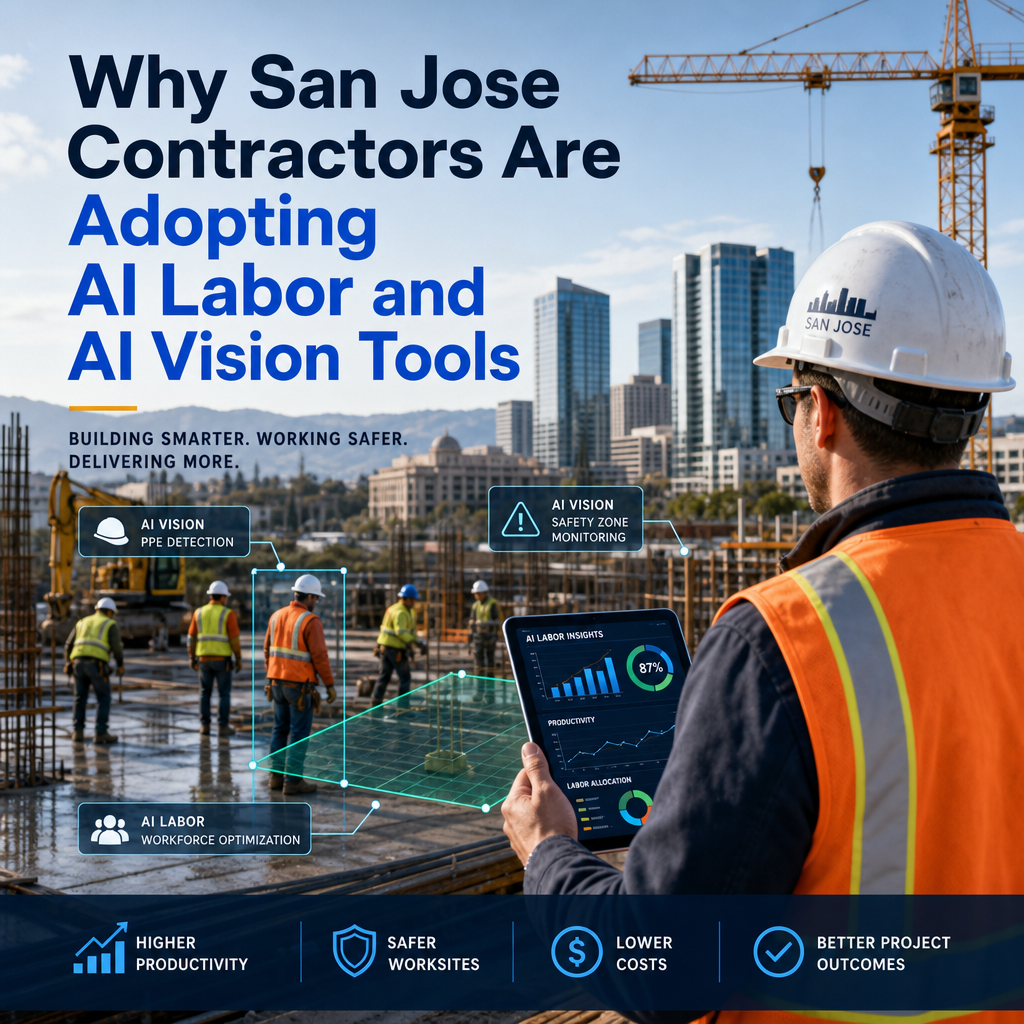
Why San Jose Contractors Are Adopting AI Labor and Vision Tools
Why San Jose Contractors Are Adopting AI Labor and AI Vision Tools
Construction in San Jose is moving fast, and so are the demands on local contractors. Between tight schedules, rising labor costs, and higher expectations for quality and safety, many firms are looking for smarter ways to stay competitive. That is why AI labor and AI vision tools are quickly becoming part of the modern contractor’s toolkit.
These technologies are not replacing skilled workers. Instead, they are helping teams work faster, make better decisions, and reduce costly mistakes. In a market as competitive as San Jose, that can make a big difference.
The Pressure on San Jose Contractors
San Jose contractors face a unique set of challenges. The region’s strong economy creates constant demand for commercial, residential, and infrastructure projects. At the same time, contractors must deal with:
- Limited skilled labor
- Tight project timelines
- Safety compliance requirements
- Rising material and operating costs
- Greater client expectations for transparency
Traditional project management methods can only go so far. Paper logs, manual inspections, and guesswork are harder to rely on when every delay affects profit. That is where AI tools are making an impact.
What Are AI Labor and AI Vision Tools?
AI labor tools use artificial intelligence to help manage workers, schedules, productivity, and resource allocation. They can analyze data from job sites and identify patterns that help managers assign the right people to the right tasks.
AI vision tools use cameras and computer vision to “see” what is happening on a site. They can track progress, identify safety risks, detect equipment movement, and compare actual work to project plans.
Together, these tools give contractors more visibility into day-to-day operations.
Common Uses on Job Sites
Some of the most useful applications include:
- Monitoring job site activity in real time
- Tracking worker presence and productivity
- Detecting safety violations, such as missing PPE
- Comparing construction progress against schedules
- Identifying equipment misuse or idle time
- Creating visual records for clients and inspections
These tools do not just collect data. They turn that data into action.
Better Labor Management
Labor is one of the biggest expenses on any construction project. When crews are not scheduled efficiently, time and money are lost. AI labor tools help San Jose contractors use their workforce more effectively.
For example, AI can predict when certain trades will be needed based on project stage, weather, or material delivery timing. It can also help identify labor bottlenecks before they slow the entire project.
This means fewer idle workers, better coordination between teams, and stronger overall productivity.
Benefits of AI Labor Tools
Using AI labor tools can lead to:
- Smarter workforce scheduling
- Lower overtime costs
- Reduced downtime
- Improved task assignment
- Better forecasting for future projects
For contractors managing multiple crews or job sites, these improvements can add up quickly.
Stronger Safety and Compliance
Safety is a top priority in construction, and AI vision tools are helping contractors improve it. Cameras powered by computer vision can recognize unsafe behavior in real time. They may detect when workers enter restricted areas, fail to wear required protective gear, or operate equipment unsafely.
Instead of relying only on periodic inspections, contractors can get continuous monitoring. That allows them to respond to hazards faster and prevent accidents before they happen.
In a city like San Jose, where many projects involve dense urban sites and active public spaces, this extra layer of oversight is especially valuable.
How AI Vision Supports Safety
AI vision can help with:
- PPE compliance checks
- Hazard zone monitoring
- Fall risk detection
- Equipment safety tracking
- Incident documentation
By reducing avoidable incidents, contractors can protect workers and avoid delays tied to injuries or violations.
More Accurate Project Tracking
One of the biggest frustrations in construction is not knowing exactly where a project stands. AI vision tools solve that by creating a live view of the site. They can compare visual progress with the schedule and alert managers when work is behind or when a phase is moving faster than expected.
This helps contractors make better decisions earlier. If one area is delayed, crews can be reassigned before the issue grows. If a task is complete, the next phase can begin sooner.
That kind of visibility is a major advantage in a fast-moving market.
Better Communication With Clients
Clients want updates they can trust. AI tools make it easier to provide clear, data-backed progress reports. Instead of vague status updates, contractors can share visuals, timelines, and measurable milestones.
This improves transparency and builds trust. It also reduces misunderstandings, since clients can see what is happening on site without relying on slow manual reporting.
For San Jose contractors competing for repeat business and referrals, that improved communication can be a strong selling point.
Why Adoption Is Growing Now
Several factors are pushing adoption forward:
- Labor shortages are making efficiency more important than ever.
- Technology is more accessible than it used to be.
- Clients expect faster results and better reporting.
- Safety requirements continue to increase.
- Profit margins are tight, so waste is harder to absorb.
As more contractors see real-world results, AI tools are shifting from experimental to essential.
The Future of Construction in San Jose
San Jose has always been a city shaped by innovation. It is no surprise that its contractors are embracing tools that improve speed, safety, and precision. AI labor and AI vision tools are helping firms stay competitive in a market where every advantage matters.
The contractors who adopt these technologies now are positioning themselves for stronger performance in the years ahead. They are not just keeping up with change. They are building a smarter way to work.