
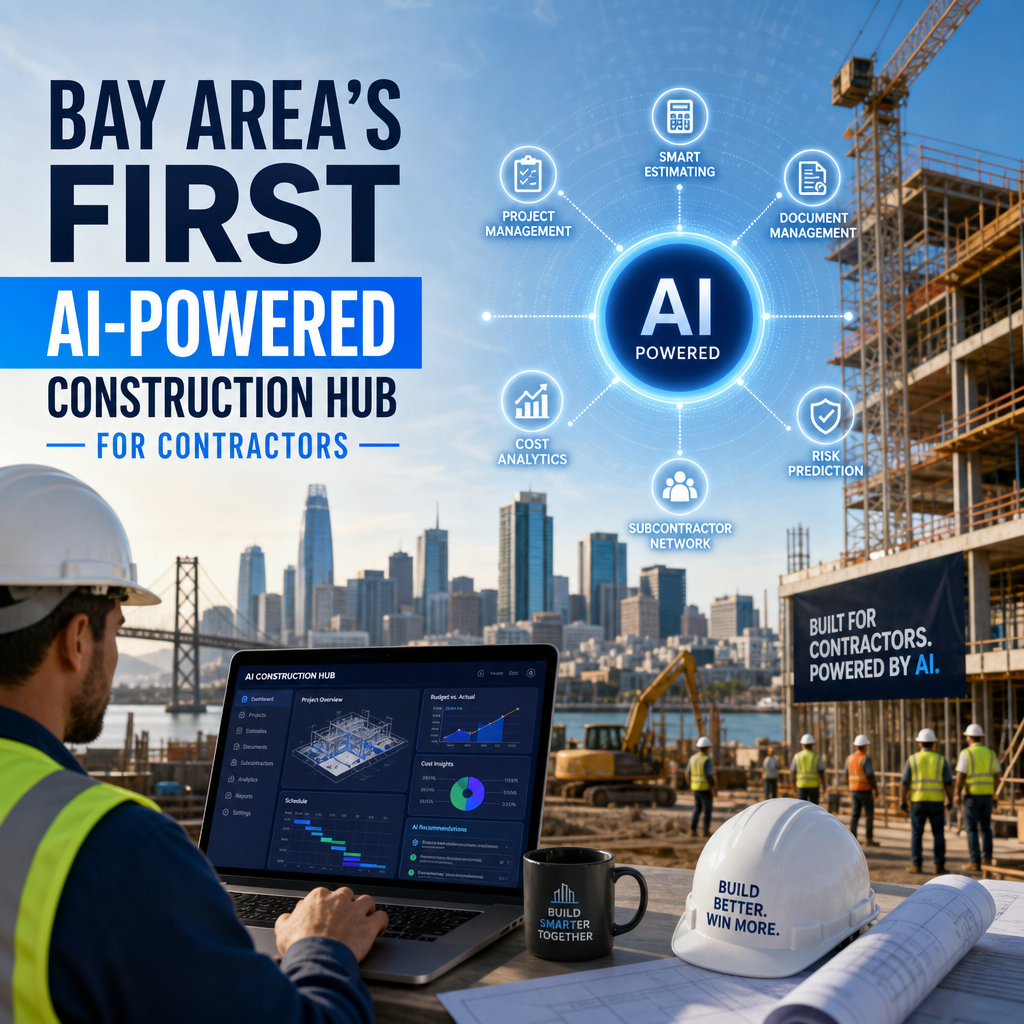
Bay Area’s First AI-Powered Construction Hub for Contractors
The Bay Area’s First AI-Powered Construction Hub: What It Means for Contractors
The Bay Area has long been a testing ground for new technology, but its latest innovation could have a direct impact on one of the region’s oldest industries: construction. The launch of the Bay Area’s first AI-powered construction hub marks a major shift in how contractors plan, build, manage, and deliver projects.
For contractors, this is more than a headline. It signals a new way of working—one that blends data, automation, and real-time insight with hands-on construction expertise. The result could be faster project delivery, fewer errors, and better collaboration across the entire job site.
What Is an AI-Powered Construction Hub?
An AI-powered construction hub is a centralized space where construction teams can access advanced digital tools, training, project support, and data-driven systems. Rather than relying only on paper plans, disconnected software, or manual oversight, contractors can use artificial intelligence to help make smarter decisions.
These hubs often support functions such as:
- Project scheduling and forecasting
- Estimating and cost control
- Safety monitoring
- Resource allocation
- Design coordination
- Equipment and workforce tracking
In a region like the Bay Area, where labor costs are high and project timelines are tight, these tools can provide a major competitive edge.
Why This Matters for Contractors
Contractors are under constant pressure to do more with less. They need to manage labor shortages, supply chain delays, rising material costs, and increasingly complex building codes. AI can help reduce some of that strain.
The first AI-powered construction hub in the Bay Area is important because it gives contractors access to tools that were once available only to the largest firms. Smaller and mid-sized companies may now be able to use technology that improves efficiency without requiring a full internal tech team.
Key benefits for contractors include:
- Better project planning through predictive analytics
- Faster decision-making with real-time data
- Reduced waste from improved material forecasting
- More accurate bids and estimates
- Improved jobsite safety through monitoring and alerts
- Easier communication between field and office teams
This kind of support can help contractors stay competitive in a demanding market.
How AI Is Changing Day-to-Day Construction Work
AI is not replacing contractors. Instead, it is helping them work more effectively.
Smarter estimating
Traditional estimating can take hours or days, especially when a project has many moving parts. AI tools can analyze historical data, pricing trends, and project scope to generate more accurate estimates faster. That means fewer surprises once work begins.
Better scheduling
Construction delays often happen because of poor coordination or changing conditions. AI can identify scheduling conflicts early and recommend adjustments before they become costly problems. For contractors, this can mean fewer idle crews and better use of time on site.
Improved safety
Safety remains one of the biggest concerns on any jobsite. AI-powered systems can help spot risks by analyzing site conditions, equipment use, and worker behavior. Some systems can even flag potential hazards in real time, giving teams a chance to respond before an incident occurs.
More efficient project management
Contractors often spend too much time chasing updates, checking progress, and resolving miscommunication. AI tools can consolidate project information into a single platform, making it easier to track tasks, review milestones, and keep everyone aligned.
What Contractors Should Expect from the Hub
The Bay Area’s construction hub is likely to become a place where contractors can test new systems, build skills, and connect with technology partners. This could include training on AI platforms, workshops on digital project management, and access to tools that simplify everyday operations.
For many contractors, the biggest value may come from exposure. By seeing how AI works in a construction setting, teams can better understand which tools fit their business and which processes can be improved.
Contractors may also benefit from:
- Networking with technology providers
- Learning from pilot projects
- Accessing mentorship and implementation support
- Finding new ways to bid and manage work
- Staying ahead of industry trends
In a fast-changing market, that kind of support can make a real difference.
Challenges Contractors Should Keep in Mind
While the opportunity is exciting, adoption will not be automatic. Contractors still need to consider the challenges of bringing AI into daily operations.
Some common concerns include:
- Upfront investment in new tools
- Training workers to use new systems
- Integrating AI with existing software
- Protecting data and project privacy
- Avoiding overreliance on automation
AI works best when it supports experienced professionals, not when it replaces their judgment. Contractors who adopt these tools thoughtfully are more likely to see long-term value.
The Future of Construction in the Bay Area
The launch of the Bay Area’s first AI-powered construction hub shows that the industry is moving toward a more connected and intelligent future. Contractors who embrace these tools early may gain an edge in efficiency, accuracy, and project delivery.
As AI becomes more common in construction, the companies that succeed will likely be the ones that combine technology with practical field experience. The hub offers a glimpse of what that future looks like: better planning, safer jobsites, and smarter ways to build.
For contractors in the Bay Area, that is not just innovation. It is an opportunity to work better, compete stronger, and build for what comes next.