
Future of Bay Area Construction: AI, Automation, and Smart Management
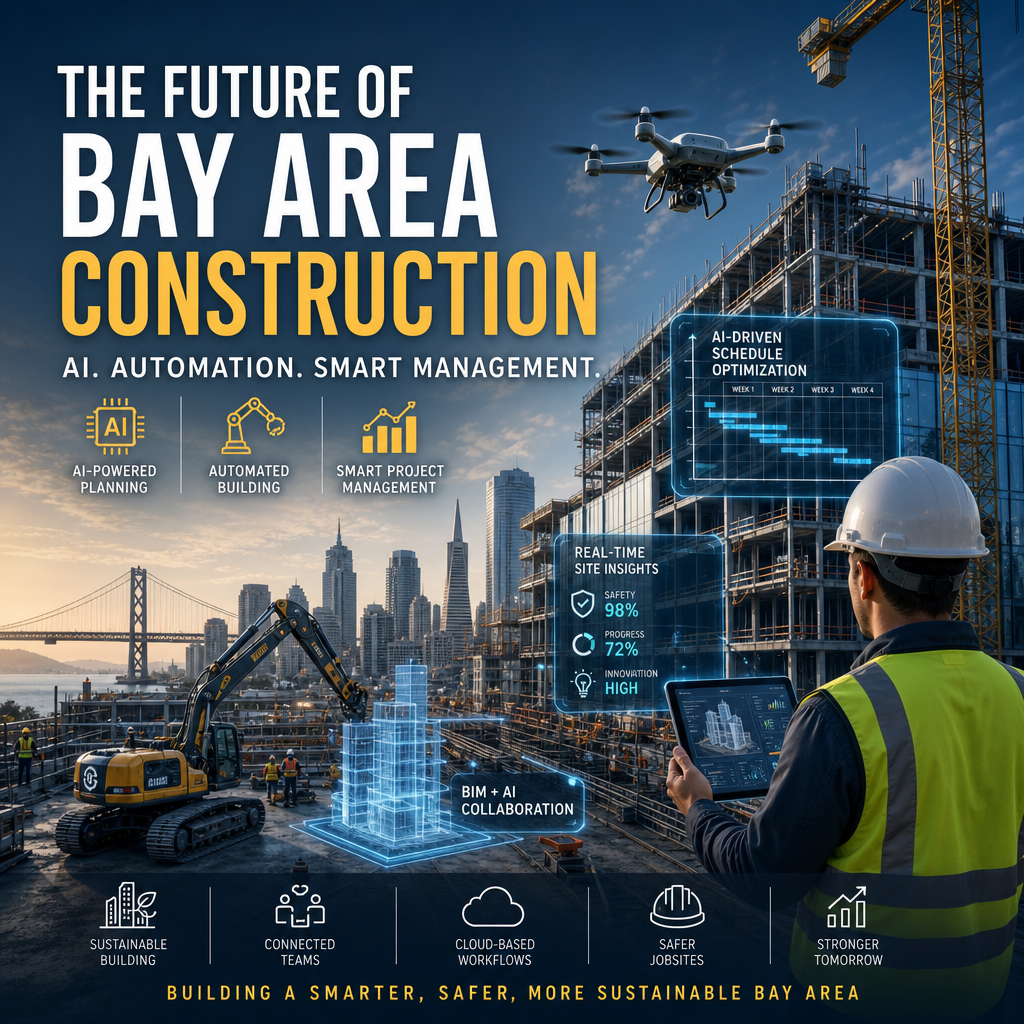
The Future of Construction in the Bay Area: Automation, AI Vision, and Smart Project Management
The future of construction in the Bay Area is being shaped by a powerful mix of technology, labor innovation, and rising demand for faster, more efficient project delivery. In a region known for high costs, complex regulations, and constant growth, construction companies are looking beyond traditional methods. Automation, AI vision, and smart project management are no longer distant ideas—they are becoming essential tools on modern job sites.
As housing, infrastructure, and commercial development continue to expand, the Bay Area is emerging as a testing ground for construction technologies that promise greater accuracy, safer worksites, and better coordination from start to finish.
Why Construction in the Bay Area Is Changing
The Bay Area faces unique construction challenges. Labor shortages, high material costs, tight schedules, and limited space all put pressure on contractors and developers. At the same time, local projects often require advanced coordination between architects, engineers, inspectors, and city agencies.
This environment makes the region ideal for innovation. Companies that adopt smarter tools can reduce delays, improve quality, and maintain tighter control over budgets.
Key pressures driving change
- Rising labor costs and workforce shortages
- Demand for faster project completion
- Strict building codes and permitting requirements
- Need for more sustainable building practices
- High competition among developers and contractors
These pressures are encouraging the industry to embrace technology in ways that were uncommon just a few years ago.
Automation Is Reshaping the Job Site
Automation is one of the biggest forces influencing the future of construction in the Bay Area. From robotic layout tools to automated equipment and prefabrication systems, construction teams are finding ways to complete more work with less waste and fewer errors.
What automation looks like in practice
Automated systems are being used for:
- Precise material cutting and fabrication
- Robotic bricklaying and surveying
- Drone-based site mapping
- Prefabricated modular construction
- Equipment monitoring and maintenance alerts
These tools help reduce manual repetition and improve consistency across projects. In a region where time is money, automation can shorten schedules and lower the likelihood of costly rework.
Benefits for Bay Area projects
Automation also supports safer and more predictable workflows. Workers can spend less time on repetitive or hazardous tasks, while machines handle jobs that require precision or endurance. For dense urban construction sites, this can make a significant difference in efficiency and safety.
AI Vision Is Bringing New Eyes to Construction
AI vision is another major development changing how projects are managed and monitored. Using cameras, drones, and machine learning, AI systems can interpret visual data in real time and flag issues that human teams might miss.
This technology is particularly valuable in the Bay Area, where complex sites and fast-moving projects require constant oversight.
How AI vision helps on the job
AI vision tools can:
- Track progress against project plans
- Detect safety hazards and compliance issues
- Identify defects or quality concerns
- Monitor equipment and worker activity
- Compare site conditions with BIM and design models
For example, if a structure is installed incorrectly or a safety barrier is missing, AI-powered systems can alert managers quickly. That allows teams to respond before minor issues become major delays.
Better visibility, fewer surprises
One of the biggest advantages of AI vision is visibility. Traditional site inspections can be limited by time, weather, or human error. AI tools provide a more continuous view of what is happening on-site, making it easier to spot patterns, track productivity, and maintain quality standards.
Smart Project Management Is the New Competitive Edge
Technology is not only changing the physical job site—it is also transforming how projects are planned and managed. Smart project management platforms are helping teams coordinate schedules, materials, budgets, and labor in real time.
For Bay Area construction firms, this kind of digital control is becoming a major competitive advantage.
Features of smart project management
Modern platforms often include:
- Real-time scheduling and task tracking
- Centralized document sharing
- Budget forecasting and cost control
- Digital approvals and workflow automation
- Field reporting and mobile communication
Instead of relying on scattered emails, paper reports, or disconnected software, teams can work from a single source of truth. That improves communication and reduces the risk of missed deadlines or duplicated effort.
Smarter decisions, faster
With better data comes better decision-making. Project managers can identify delays earlier, adjust resources more efficiently, and keep stakeholders informed with less manual effort. In a market as competitive as the Bay Area, those advantages can have a real impact on profitability and client satisfaction.
The Human Side of High-Tech Construction
Even as automation and AI grow, construction remains a people-driven industry. Technology is not replacing skilled workers—it is changing how they work. The most successful firms will be those that combine advanced tools with experienced teams who know how to use them effectively.
This means investing in training, digital literacy, and change management. Crews need to understand not only how to operate new systems, but also how those systems improve the broader construction process.
A new skill set for the modern workforce
Future-ready construction teams will need to be comfortable with:
- Digital plan review
- Data-driven reporting
- Drone and camera-based site monitoring
- Modular assembly techniques
- Collaboration across software platforms
As the industry evolves, adaptability will matter just as much as technical expertise.
Looking Ahead
The future of construction in the Bay Area will likely be defined by faster workflows, safer sites, and smarter coordination. Automation will take on repetitive tasks. AI vision will provide real-time insight into site conditions. Smart project management will help teams stay organized and responsive in a demanding market.
Together, these technologies are making construction more precise, efficient, and resilient. For developers, contractors, and project owners in the Bay Area, the message is clear: the future belongs to firms that embrace innovation while keeping quality, safety, and collaboration at the center of every project.