
How AI Is Improving Remodeling and Renovation Projects in San Francisco
How AI Is Improving Remodeling and Renovation Projects in San Francisco
San Francisco homeowners are no strangers to complex remodeling and renovation projects. From steep lots and historic homes to tight timelines and strict permitting rules, the city presents unique challenges at every stage. That is where artificial intelligence is starting to make a real difference. How AI is improving remodeling and renovation projects in San Francisco is no longer a future idea—it is already changing how contractors, designers, and property owners plan, manage, and complete work.
AI tools are helping teams make smarter decisions, reduce costly mistakes, and create better results with less stress. In a market as competitive and fast-moving as San Francisco, those advantages matter.
Smarter Planning from the Start
One of the biggest ways AI is improving remodeling and renovation projects in San Francisco is by making the planning phase more accurate. Instead of relying only on manual estimates and guesswork, contractors can now use AI-powered software to analyze project data, building conditions, material costs, and labor needs.
This leads to better forecasts for:
- Project timelines
- Budget estimates
- Material quantities
- Potential delays
- Permit-related requirements
For homeowners, this means fewer surprises once construction begins. For contractors, it means stronger bids and more confidence in the numbers they present.
Better Design Visualizations
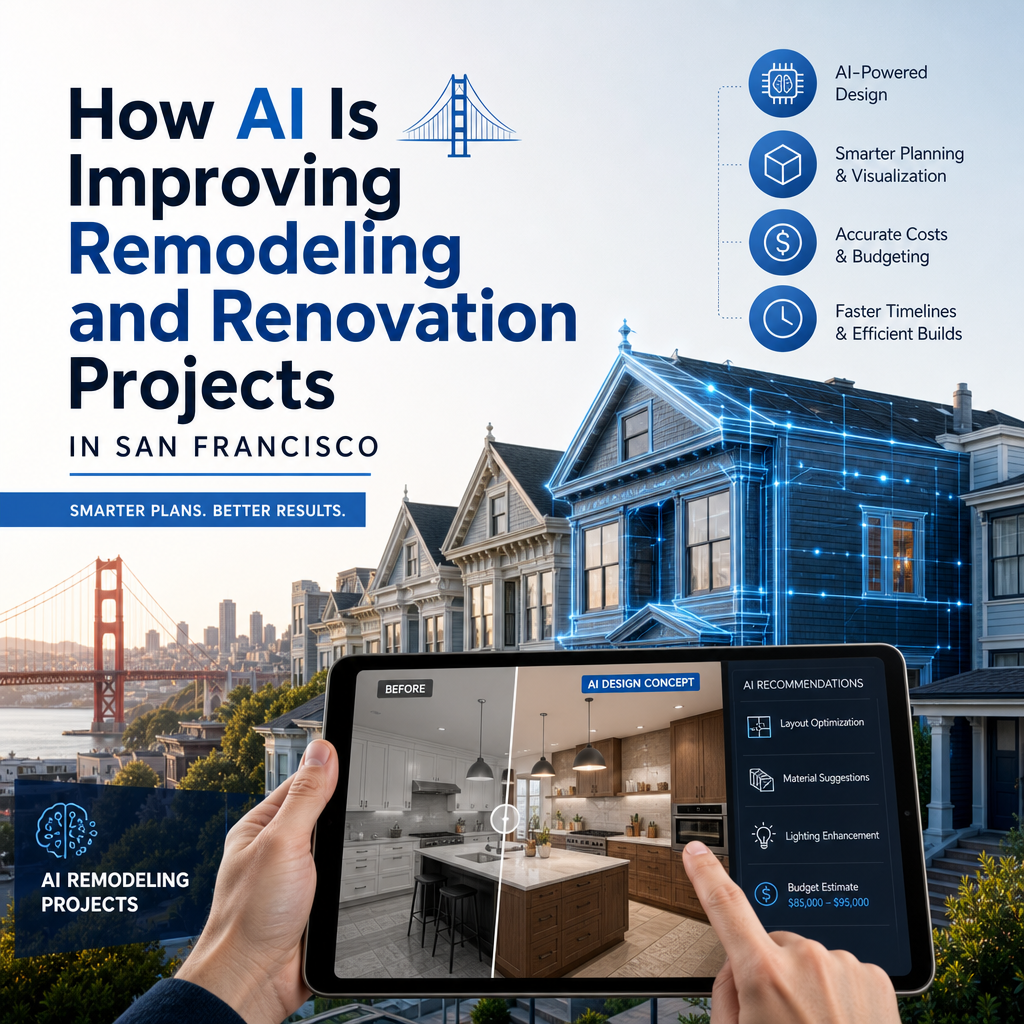
Renovation decisions are easier when homeowners can clearly see the final result before work begins. AI design tools are making that possible with advanced rendering and visualization features. These platforms can generate realistic mockups of kitchens, bathrooms, additions, and full-home remodels based on room measurements and style preferences.
In a city like San Francisco, where many homes blend old architecture with modern updates, this is especially useful. AI helps designers test different materials, layouts, lighting options, and finishes quickly. That allows clients to compare ideas and make faster decisions.
Benefits of AI design tools
- Faster concept development
- More accurate visual mockups
- Easier client approvals
- Fewer design changes during construction
When homeowners understand the vision early, the entire renovation process tends to move more smoothly.
Improved Project Management
Keeping a remodeling project on schedule is always a challenge, but especially in San Francisco, where subcontractor coordination, deliveries, and inspections can create bottlenecks. AI-powered project management systems help teams stay organized by tracking tasks, deadlines, and resource allocation in real time.
These systems can send alerts when materials are delayed, identify tasks that are falling behind, and even predict schedule conflicts before they happen. Instead of reacting to problems after they occur, project managers can take action sooner.
That kind of predictive insight can save time and money, particularly on larger renovations involving multiple trades.
More Accurate Cost Control
Budget overruns are one of the most common pain points in remodeling. AI is helping to reduce that risk by improving cost tracking and expense forecasting. By comparing current spending against historical project data, AI tools can flag areas where costs are likely to rise.
This is especially helpful in San Francisco, where labor and material costs can fluctuate quickly. AI can assist contractors in adjusting budgets, recommending alternatives, and identifying savings opportunities without sacrificing quality.
For example, if a project starts to exceed its planned cabinetry budget, the software may suggest alternative suppliers, lower-cost finishes, or a revised scope to keep the project on track.
Faster Permitting and Compliance Support
San Francisco is known for its detailed permitting process, and homeowners often find that paperwork and approvals slow down their renovation timelines. AI is beginning to help in this area too. Some systems can review plans for compliance issues, organize required documents, and identify missing information before submissions are made.
This does not replace city review, of course, but it can make the process more efficient. Fewer errors in applications mean fewer delays, and that can make a major difference in the overall schedule.
AI support can be especially valuable for:
- Historic property renovations
- Multi-unit residential projects
- Energy-efficiency upgrades
- Structural changes requiring city approval
Better Communication Between Teams
A successful remodel depends on communication among homeowners, designers, contractors, suppliers, and inspectors. AI tools can streamline that communication by centralizing updates, generating progress summaries, and keeping everyone informed about changes.
Some systems can even analyze messages and project activity to highlight unresolved issues or pending decisions. That means fewer misunderstandings and less time spent chasing information.
In a fast-paced renovation environment, clear communication can prevent expensive rework and help everyone stay aligned.
Safer Job Sites
Safety is another area where AI is making an impact. Construction sites can be hazardous, and remodels often involve tight spaces, old wiring, hidden structural issues, and material handling risks. AI-enabled cameras, sensors, and monitoring systems can detect unsafe conditions and alert crews in real time.
These tools can help identify:
- Fall hazards
- Equipment misuse
- Unsafe access zones
- Overloaded work areas
By catching problems early, AI contributes to safer job sites and fewer project disruptions.
A Better Experience for Homeowners
At the end of the day, remodeling is not just about tools and technology. It is about creating a better experience for the homeowner. AI helps reduce uncertainty, improve transparency, and make decisions easier at every step.
Instead of waiting weeks for updated estimates or guessing how a finished space will look, clients can get faster answers and more confident guidance. That leads to smoother projects and better satisfaction when the work is complete.
The Future of Remodeling in San Francisco
San Francisco’s remodeling market will likely continue embracing AI as the technology becomes more powerful and accessible. From initial design to final inspection, AI is already helping teams work faster, smarter, and with fewer costly errors.
For homeowners planning a renovation, this means more control and clarity. For contractors and designers, it means better efficiency and stronger results. As the city continues to evolve, AI will play an increasingly important role in shaping the future of home improvement.
How AI is improving remodeling and renovation projects in San Francisco is simple to see: it makes complex projects easier to manage, more predictable, and ultimately more successful.