
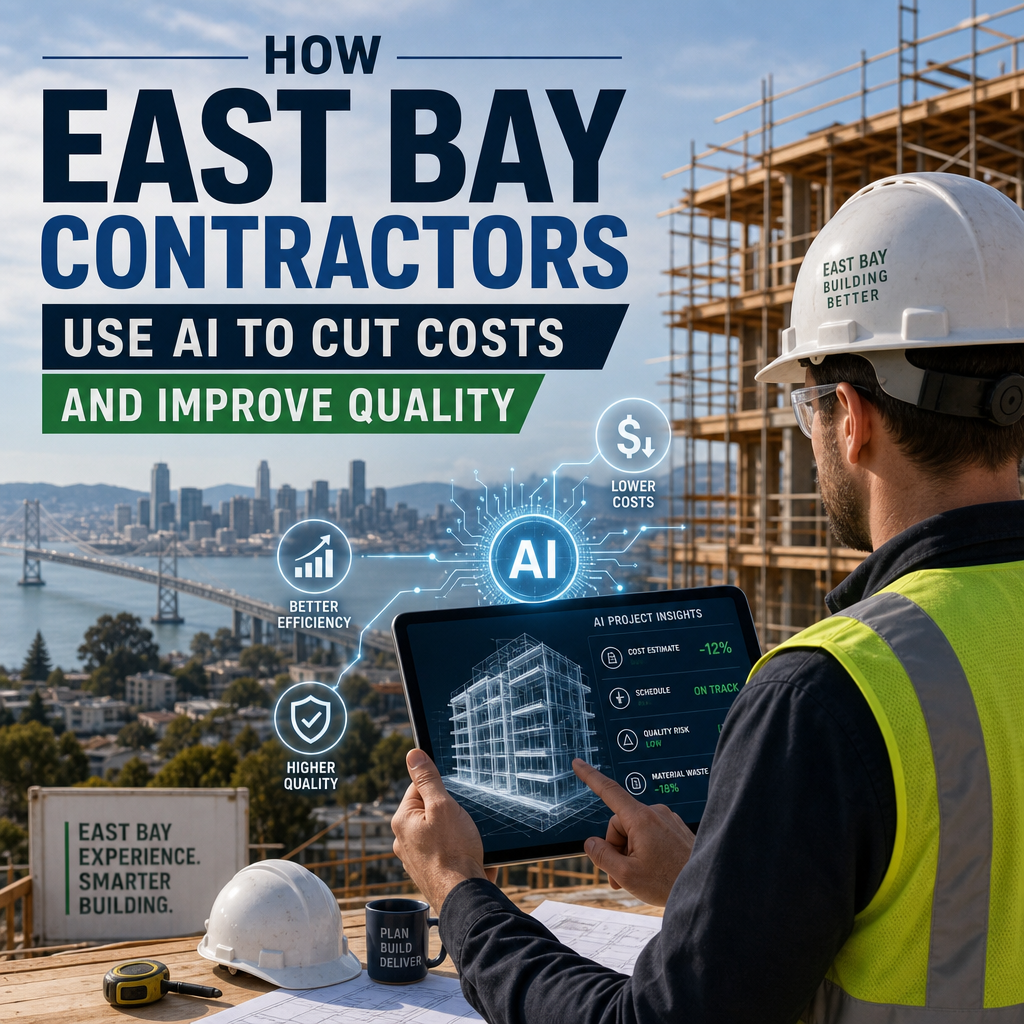
How East Bay Contractors Use AI to Cut Costs and Improve Quality
How East Bay Contractors Are Using AI to Reduce Costs and Improve Quality
Artificial intelligence is changing the way construction work gets done across the East Bay. From small remodels to large commercial projects, East Bay contractors are finding practical ways to use AI to cut waste, improve scheduling, and deliver better results. What once sounded like a high-tech trend is now becoming a useful tool on job sites, in offices, and during project planning.
For contractors working in a competitive market, the appeal is clear: lower costs, fewer delays, and more consistent quality. AI is not replacing skilled tradespeople, but it is helping teams make smarter decisions faster.
Smarter Planning Before the First Hammer Swing
One of the biggest ways AI helps contractors is during the planning phase. Construction projects often go over budget because of inaccurate estimates, missed details, or poor coordination. AI-powered software can analyze past projects, material pricing, labor trends, and scheduling data to create more accurate forecasts.
This helps East Bay contractors:
- Estimate material needs more precisely
- Identify potential delays early
- Build more realistic project timelines
- Reduce costly change orders
By improving the pre-construction process, contractors can avoid problems before they start. That means less rework, fewer surprises, and a stronger foundation for the entire project.
Better Project Scheduling and Coordination
Delays are one of the most expensive issues in construction. A late delivery, a missed inspection, or a scheduling conflict between subcontractors can throw off an entire project. AI tools help contractors manage these moving parts by analyzing schedules and predicting where conflicts may happen.
For example, AI can spot when two crews are likely to need the same space at the same time or when weather patterns might affect a concrete pour. It can also help managers adjust labor schedules based on real-time progress.
For East Bay contractors, this is especially useful in a region where timelines are tight and labor costs are high. Better scheduling means less downtime and more efficient use of people and equipment.
Reducing Waste and Material Costs
Construction waste is expensive. Extra materials, unnecessary deliveries, and poor inventory tracking can all add up quickly. AI helps reduce waste by improving how contractors order, track, and use materials.
Some systems use historical data and current project requirements to recommend the right amount of lumber, concrete, drywall, or other supplies. Others monitor usage in real time and alert teams when inventory is running low or being overordered.
This can lead to:
- Lower material costs
- Less job site waste
- Fewer storage problems
- More sustainable building practices
In a region where environmental awareness matters, reducing waste is not just a financial benefit. It also supports greener construction methods and better resource management.
Improving Quality Control on the Job Site
Quality issues can be expensive to fix after the fact. AI is helping contractors catch problems earlier, before they turn into major repairs or customer complaints. Drones, cameras, and smart sensors can collect job site data that AI software then reviews for signs of defects, safety concerns, or code compliance issues.
For example, AI can help identify:
- Improper framing
- Uneven surfaces
- Missing safety equipment
- Inconsistent workmanship
This gives project managers a chance to correct issues quickly. Instead of waiting for a final inspection or client walkthrough, teams can maintain quality throughout the build. For East Bay contractors, that means happier clients and a stronger reputation.
Supporting Safer Work Environments
Safety and quality often go hand in hand. When a job site is safer, work tends to be more efficient and accurate. AI can help contractors identify hazards, monitor high-risk areas, and improve safety planning.
Some tools analyze site photos or video to detect unsafe behaviors, such as workers entering restricted zones or failing to wear protective gear. Others use predictive analytics to flag tasks that have a higher chance of accidents based on past conditions.
This allows contractors to respond before accidents happen. Fewer injuries mean fewer delays, lower insurance costs, and less disruption to the project.
Helping Smaller Contractors Compete
AI is not only for large firms with big budgets. Many affordable tools are now available to smaller East Bay contractors who want to work more efficiently without adding extra staff. Cloud-based estimating platforms, AI scheduling apps, and automated reporting tools can save time and reduce administrative work.
This is especially valuable for smaller teams that need to do more with less. Instead of spending hours on manual paperwork or guesswork, contractors can focus on hands-on work and client service.
The Future of Construction in the East Bay
AI will not solve every challenge in construction, but it is quickly becoming a useful part of the toolkit. East Bay contractors who adopt these technologies are gaining a competitive edge through better planning, less waste, stronger quality control, and improved safety.
As the industry continues to evolve, contractors who embrace AI may find it easier to manage costs while delivering higher-quality results. In a market where every dollar and every day matters, that advantage can make a big difference.
The most successful builders will be the ones who combine skilled craftsmanship with smart technology. AI is helping make that possible.