
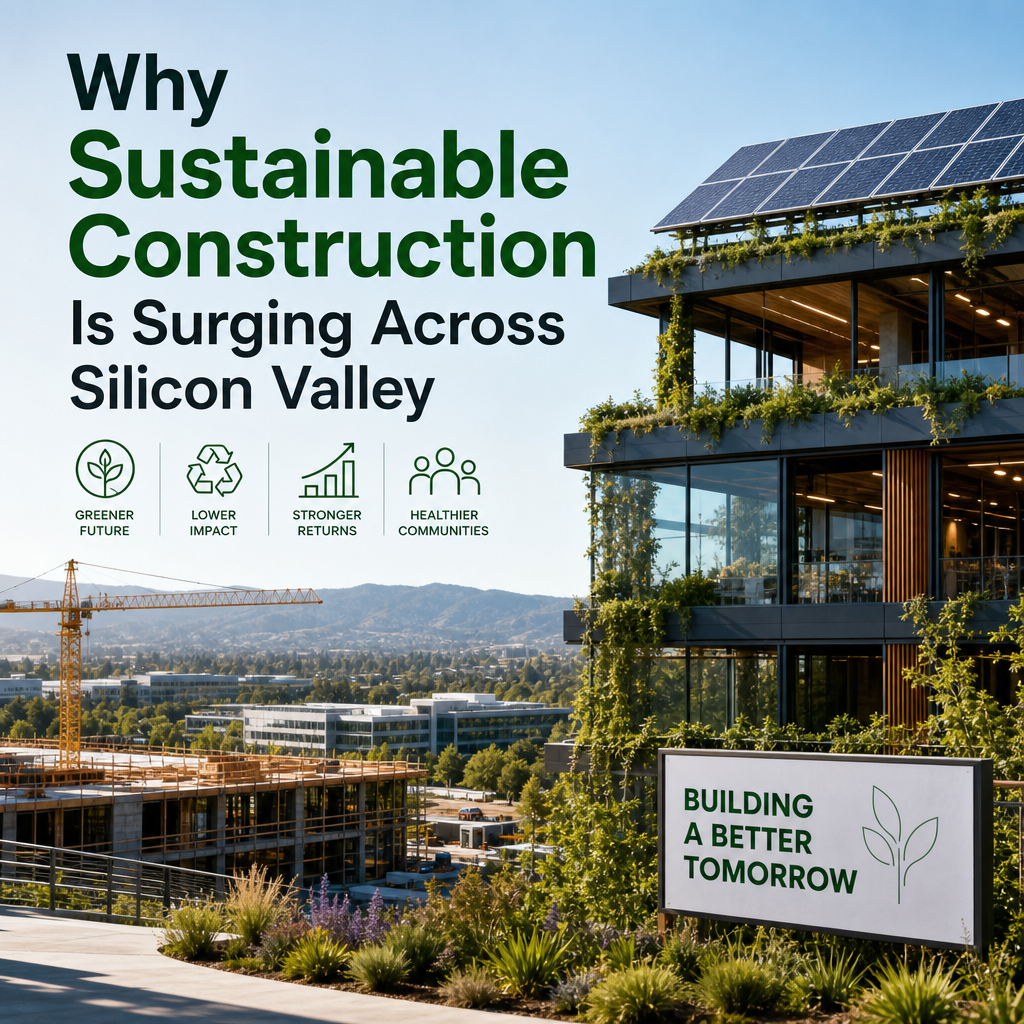
Why Sustainable Construction Is Surging Across Silicon Valley
Why Sustainable Construction Is Surging Across Silicon Valley
Sustainable construction is no longer a niche idea in Silicon Valley. It has become a major priority for developers, property owners, tech companies, and city planners alike. In a region known for innovation, it makes sense that the built environment is evolving too. From energy-efficient office campuses to low-impact residential developments, sustainable construction is reshaping how buildings are designed, built, and operated.
The surge is being driven by a mix of environmental urgency, economic logic, and strong market demand. In Silicon Valley, where real estate is expensive and expectations are high, building smarter is quickly becoming the new standard.
A Region Built on Innovation
Silicon Valley has always been ahead of the curve. The same mindset that fuels advances in software, artificial intelligence, and hardware is now influencing construction. Companies in the region want buildings that reflect their values, support employee well-being, and reduce long-term operating costs.
Sustainable construction fits that goal perfectly. It combines modern design with practical efficiency, creating buildings that use less energy, waste fewer resources, and offer healthier indoor environments.
For many organizations, sustainability is not just a branding choice. It is part of how they attract talent, satisfy investors, and prepare for stricter environmental standards.
Rising Energy Costs Make Efficiency Essential
One of the biggest reasons sustainable construction is surging is simple: it saves money over time. In a high-cost region like Silicon Valley, energy bills can quickly become a major expense for commercial and residential buildings.
Sustainable construction helps reduce those costs through:
- Better insulation and high-performance building envelopes
- Energy-efficient HVAC systems
- Smart lighting and automated controls
- Solar panels and renewable energy integration
- Improved glazing and natural daylight design
These features lower utility bills and reduce strain on building systems. Over the life of a property, the savings can be substantial. For developers and owners, that makes sustainable construction a smart financial decision, not just an environmental one.
Local Policies Are Pushing Change
Cities across Silicon Valley and the greater Bay Area have adopted stricter building codes and sustainability goals. These policies encourage or require more efficient construction practices, lower carbon emissions, and better water management.
This regulatory environment has created momentum in the market. Builders and developers are increasingly expected to meet high standards for performance, from LEED certification to energy benchmarking and electrification goals.
In many cases, sustainable construction is also a way to future-proof a project. As rules become more demanding, buildings that already meet strong environmental standards are better positioned to avoid costly retrofits later.
Common policy-driven priorities include:
- Reduced greenhouse gas emissions
- Water conservation
- Electrification of building systems
- Better waste diversion during construction
- Use of low-emission materials
These requirements are helping shift the industry toward more responsible practices.
Tech Workers Expect Better Buildings
Silicon Valley’s workforce has also played a major role in this trend. Employees in the region often value sustainability, wellness, and modern workplace design. That has changed what companies look for in offices, labs, and mixed-use developments.
Sustainable construction helps create spaces that are brighter, healthier, and more comfortable. Features like natural ventilation, low-VOC materials, daylight access, and improved indoor air quality can make a meaningful difference in employee satisfaction.
This matters in a competitive labor market. Companies that invest in sustainable buildings may find it easier to recruit and retain top talent. A greener workplace sends a clear message: the organization is thinking long term and cares about the people who use the space.
Materials and Technology Are Improving Fast
Another reason sustainable construction is accelerating is that the tools are better than ever. Builders now have access to materials and systems that make sustainability more practical and cost-effective.
Examples include:
- Recycled and reclaimed building materials
- Mass timber and low-carbon concrete alternatives
- Prefabricated components that reduce waste
- Smart building controls for energy management
- Water-saving fixtures and irrigation systems
Technology has also made it easier to measure performance. Designers and contractors can model energy use, track emissions, and optimize building systems before construction even begins. That leads to better decisions and fewer surprises.
Investors and Owners Want Long-Term Value
Sustainable construction is increasingly viewed as a value-preservation strategy. Investors are paying closer attention to environmental performance because they know inefficient buildings may lose value over time.
A well-designed sustainable building can offer:
- Lower operating expenses
- Higher tenant demand
- Stronger resale value
- Reduced maintenance needs
- Better resilience to future regulations
In Silicon Valley, where assets are closely analyzed and long-term returns matter, these benefits carry real weight. Sustainable buildings are often seen as lower-risk, higher-quality investments.
Water and Climate Concerns Matter Too
California’s climate pressures have also influenced construction trends. Water shortages, wildfire risk, heat waves, and drought conditions have made sustainability a practical necessity.
Building in a more climate-conscious way helps reduce resource use and improve resilience. That might mean drought-tolerant landscaping, efficient irrigation, fire-resistant materials, or designs that reduce cooling demand during extreme heat.
In a region that faces growing environmental stress, sustainable construction is about more than reducing emissions. It is also about creating buildings that can perform well under changing conditions.
The Future of Silicon Valley Building
The rise of sustainable construction in Silicon Valley reflects a broader shift in how people think about development. Buildings are no longer judged only by appearance or square footage. They are evaluated by performance, efficiency, health, and long-term impact.
That change is likely to continue. As technology improves, regulations tighten, and expectations rise, sustainable construction will become even more central to the region’s growth.
Silicon Valley helped shape the digital future. Now it is helping define what the future of building should look like too.